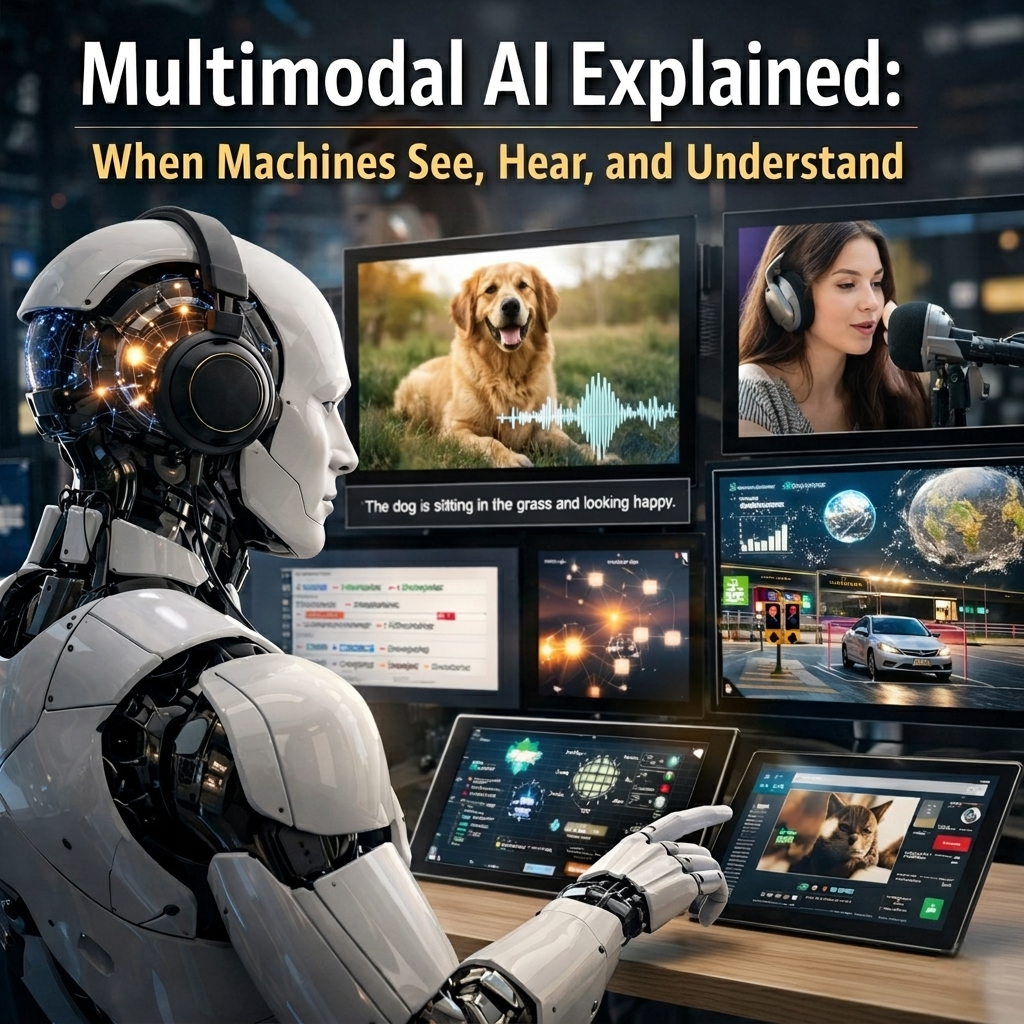
Artificial Intelligence is evolving rapidly, moving beyond simple text-based systems into models that can interpret and combine multiple types of information. This new generation of technology is known as multimodal AI, and it represents a major step forward in how machines interact with the world.
Instead of processing just one form of data, multimodal AI can understand images, audio, video, and text at the same time. This capability allows machines to perceive information more like humans do, combining different senses to make better decisions and generate more accurate responses.
What Is Multimodal AI?
Multimodal AI refers to artificial intelligence systems designed to process and integrate information from multiple data sources or “modalities.” These modalities can include:
- Text
- Images
- Audio
- Video
- Sensor data
Traditional AI models usually specialize in one type of input. For example, a text-based chatbot processes language, while an image recognition system analyzes visual data. Multimodal AI brings these abilities together into a single system that can interpret complex inputs.
For example, a multimodal AI system could watch a video, listen to the audio, read subtitles, and generate a meaningful summary of the content.
How Multimodal AI Works
Multimodal AI models rely on advanced machine learning architectures that allow different types of data to be processed simultaneously. These systems typically include specialized components that handle different modalities before combining them into a unified understanding.
The process usually involves three key steps:
1. Data Processing
Each input type is processed by a model trained for that specific modality. Images might be analyzed by computer vision models, while audio is handled by speech recognition systems.
2. Feature Integration
After processing individual inputs, the system combines the extracted information into a shared representation.
3. Decision Making
The AI uses this combined understanding to generate outputs such as answers, predictions, or actions.
This integrated approach allows machines to interpret context more accurately than single-input systems.
Real World Applications of Multimodal AI
Multimodal AI is already transforming many industries by improving how machines interpret complex data.
Healthcare
In healthcare, multimodal AI can analyze medical images, patient records, and voice notes from doctors simultaneously. This helps support faster diagnosis and more accurate treatment recommendations.
Autonomous Vehicles
Self-driving vehicles rely heavily on multimodal data. Cameras capture visual information, sensors detect obstacles, and GPS provides location data. AI systems combine all these inputs to make safe driving decisions.
Customer Service
Modern AI assistants are increasingly capable of processing both voice and text. They can analyze tone, interpret images sent by customers, and provide more helpful responses.
Content Creation
Multimodal AI tools can generate images from text prompts, create video captions, and even convert speech into written content. These capabilities are transforming creative industries and digital media production.
Why Multimodal AI Matters
The real world is inherently multimodal. Humans rely on multiple senses to interpret situations. We read body language while listening to speech, observe environments while processing sounds, and combine visual and textual information constantly.
Multimodal AI brings machines closer to this natural form of understanding. By combining multiple data sources, AI systems become more accurate, flexible, and context-aware.
This advancement also opens the door to more intuitive human-computer interactions. Instead of typing commands, users can speak, show images, or interact with systems in more natural ways.
Challenges of Multimodal AI
Despite its potential, multimodal AI presents several challenges.
Data complexity is a major issue because different data types require specialized processing techniques. Integrating them efficiently is technically demanding.
Computational requirements are also higher. Training multimodal models often requires significant computing power and large datasets.
There are also ethical considerations, including data privacy, bias in training data, and responsible AI development.
Addressing these challenges will be essential for ensuring that multimodal AI develops in a safe and beneficial way.
The Future of Multimodal AI
The future of artificial intelligence is increasingly multimodal. As models become more advanced, they will be able to understand complex environments with greater precision.
We can expect to see multimodal AI powering smarter virtual assistants, more capable robots, improved accessibility tools, and more intuitive digital experiences.
Ultimately, the ability for machines to see, hear, and understand information simultaneously represents a major leap forward in artificial intelligence. As research continues, multimodal AI will play a key role in shaping the next generation of intelligent systems.
Conclusion
Multimodal AI represents a powerful evolution in artificial intelligence. By combining multiple types of data such as text, images, audio, and video, these systems can interpret the world in more sophisticated ways.
As technology continues to advance, multimodal AI will enable machines to interact with humans more naturally and solve increasingly complex problems. Understanding this technology today helps us prepare for the intelligent systems of tomorrow.