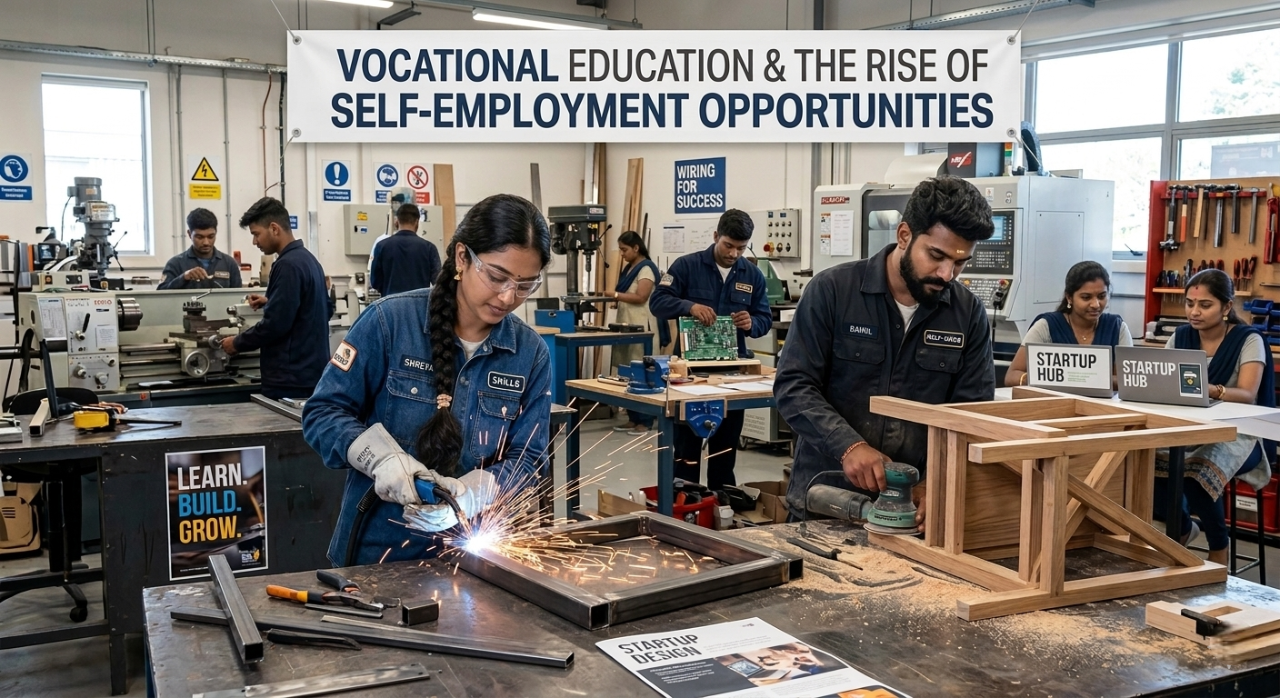
The modern workforce is evolving rapidly. While traditional employment remains important, an increasing number of professionals are choosing self-employment as a viable and rewarding career path. From electricians and technicians to digital service providers and skilled artisans, many individuals are building successful careers by offering their expertise independently.
At the center of this shift is vocational education, which equips individuals with the practical skills needed to start and sustain their own businesses.
Why Self-Employment Is Growing
Several factors are contributing to the rise of self-employment. Economic changes, technological advancements, and shifting career preferences are encouraging people to explore flexible work opportunities.
Many individuals seek greater independence and control over their professional lives. Self-employment allows them to choose their projects, manage their schedules, and directly benefit from their skills and effort.
However, success in self-employment requires more than ambition. It demands technical expertise, confidence, and the ability to deliver reliable services. This is where vocational training becomes particularly valuable.
Skills That Translate Directly Into Businesses
Vocational education focuses on hands-on training and real-world applications. Students learn practical skills in areas such as electrical work, plumbing, automotive repair, digital design, healthcare support, and technical maintenance.
These skills are not only employable within organizations but are also highly suited for independent work. For example, a trained electrician can establish a local service business, while a skilled technician may offer repair and maintenance services to households or small companies.
Because vocational training emphasizes applied learning, graduates often possess the confidence to operate independently and manage real-world challenges.
Lower Barriers to Entrepreneurship
Compared to many traditional career paths, vocational professions often have lower entry barriers for starting a business. With the right tools, certifications, and experience, skilled professionals can begin offering services within their communities.
This accessibility makes vocational careers particularly powerful for youth and individuals seeking financial independence. Instead of waiting years to build professional credentials, learners can transition quickly from training to income-generating work.
Additionally, vocational entrepreneurs frequently become trusted service providers within their communities, building long-term relationships with customers.
Strengthening Local Economies
The growth of self-employment through vocational skills has a broader economic impact. Small independent service providers contribute to local economies by creating jobs, supporting local businesses, and keeping economic activity within communities.
For instance, a technician who starts a repair shop may eventually hire assistants or apprentices. Similarly, skilled professionals often collaborate with other tradespeople on larger projects.
Workforce ecosystems that combine skill training, competency assessment, and employability support, including structured platforms such as Meritude, quietly help bridge the gap between vocational education and sustainable career opportunities.
The Importance of Business and Digital Skills
While technical expertise forms the foundation of self-employment, modern professionals also benefit from complementary skills. Basic financial management, digital marketing, and customer communication are essential for sustaining a successful independent business.
Fortunately, many vocational programs now integrate these elements into their training. By combining technical ability with entrepreneurial awareness, vocational education prepares learners not only to work but also to lead their own ventures.
A Future Driven by Skilled Independence
As industries evolve and employment models diversify, self-employment will continue to play a significant role in the global workforce. Skilled professionals who can deliver reliable services will remain in high demand.
Vocational education provides the practical foundation needed to succeed in this environment. By equipping individuals with real-world competencies and entrepreneurial confidence, it enables them to transform their skills into sustainable livelihoods.
Ultimately, vocational training does more than prepare individuals for jobs. It empowers them to create opportunities for themselves and others.