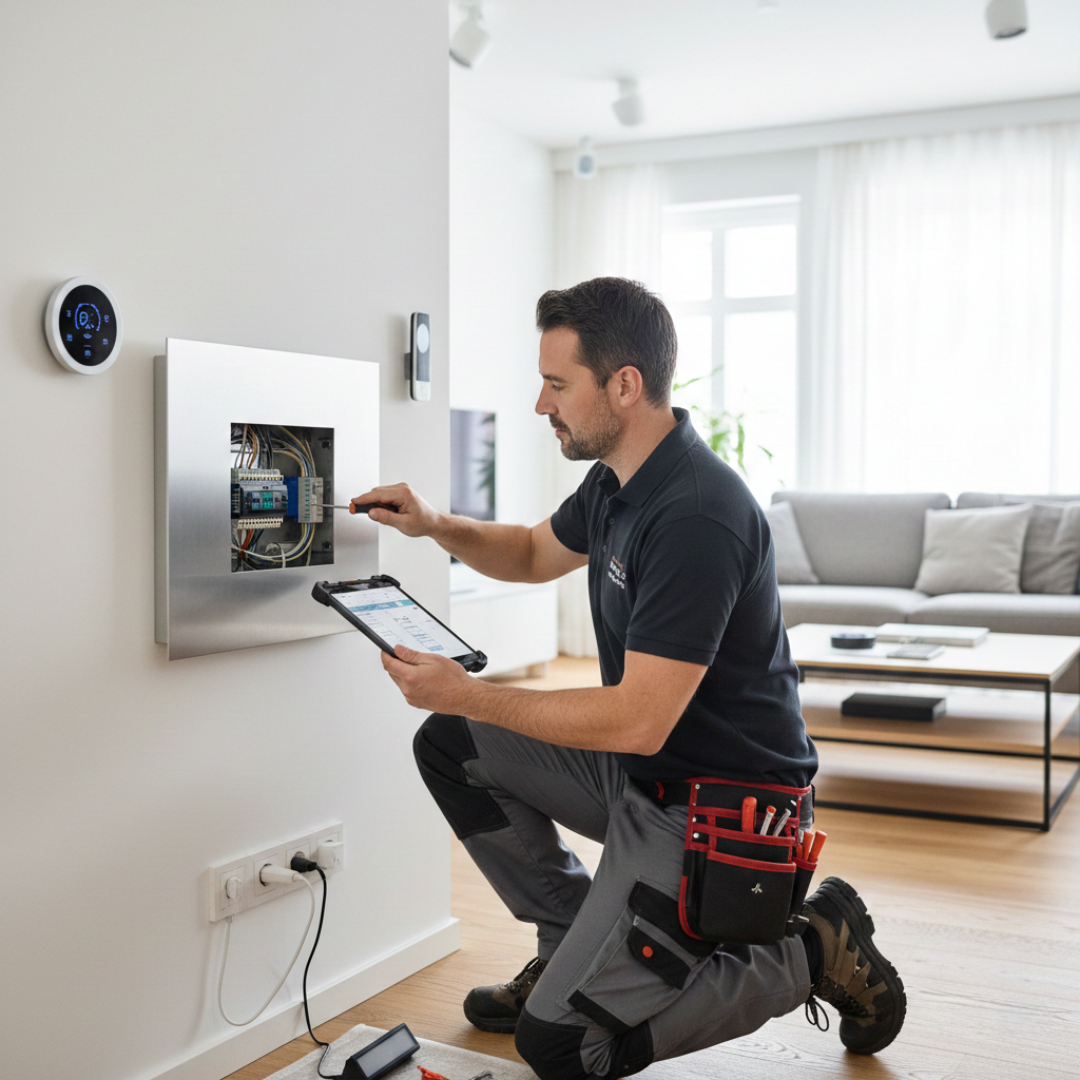
Homes are no longer just places to live. They are becoming intelligent systems that manage energy, security, comfort, and connectivity. As smart devices become mainstream, the role of the electrician is evolving rapidly. Today’s professionals are no longer limited to wiring and repairs. They are becoming smart home electricians, often referred to as smart home doctors, diagnosing, installing, and maintaining complex digital ecosystems.
This evolution is redefining the electrical trade and creating new opportunities for skilled professionals.
What Is a Smart Home Doctor
A smart home doctor is an electrician trained to work with integrated home technologies. These professionals ensure that smart systems function seamlessly and safely across devices and platforms.
Their work may include:
- Installing smart lighting and climate systems
- Integrating home security and surveillance tools
- Configuring voice assistants and automation hubs
- Troubleshooting connectivity and power issues
The role combines electrical expertise with digital literacy.
Why the Modern Electrician Must Evolve
Growing Demand for Smart Homes
From energy-efficient lighting to automated security, homeowners increasingly expect smart features. Electricians must adapt to meet these expectations.
Complex System Integration
Smart homes rely on multiple interconnected systems. A modern electrician must understand how hardware, software, and networks interact.
Safety and Reliability
Improper installation of smart devices can lead to electrical faults or data vulnerabilities. Skilled professionals ensure systems are both safe and reliable.
Skills Powering the Smart Home Electrician
Electrical Fundamentals
Strong knowledge of wiring, load management, and electrical safety remains essential.
Digital and Network Literacy
Understanding Wi-Fi, IoT protocols, and system interoperability is now part of the job.
Problem Diagnosis and Maintenance
Smart home doctors diagnose system failures, update configurations, and ensure long-term performance.
The Role of Vocational Training
Vocational education is central to preparing electricians for smart home environments. Training programs increasingly blend traditional electrical skills with modules on automation, IoT devices, and energy management.
Hands-on training allows learners to work with real smart home equipment, ensuring they are job-ready.
Career Growth and Industry Impact
Electricians with smart home expertise enjoy higher demand and broader career opportunities. They can work in residential projects, smart building installations, or home technology consulting.
For the industry, this evolution ensures homes are safer, more energy-efficient, and better connected.
Conclusion
The modern electrician is no longer just a technical worker. They are problem solvers, system integrators, and trusted advisors for connected living spaces. As smart homes continue to grow, the role of the smart home doctor will become increasingly vital.
By embracing new skills and continuous learning, electricians can future-proof their careers in an increasingly digital world.