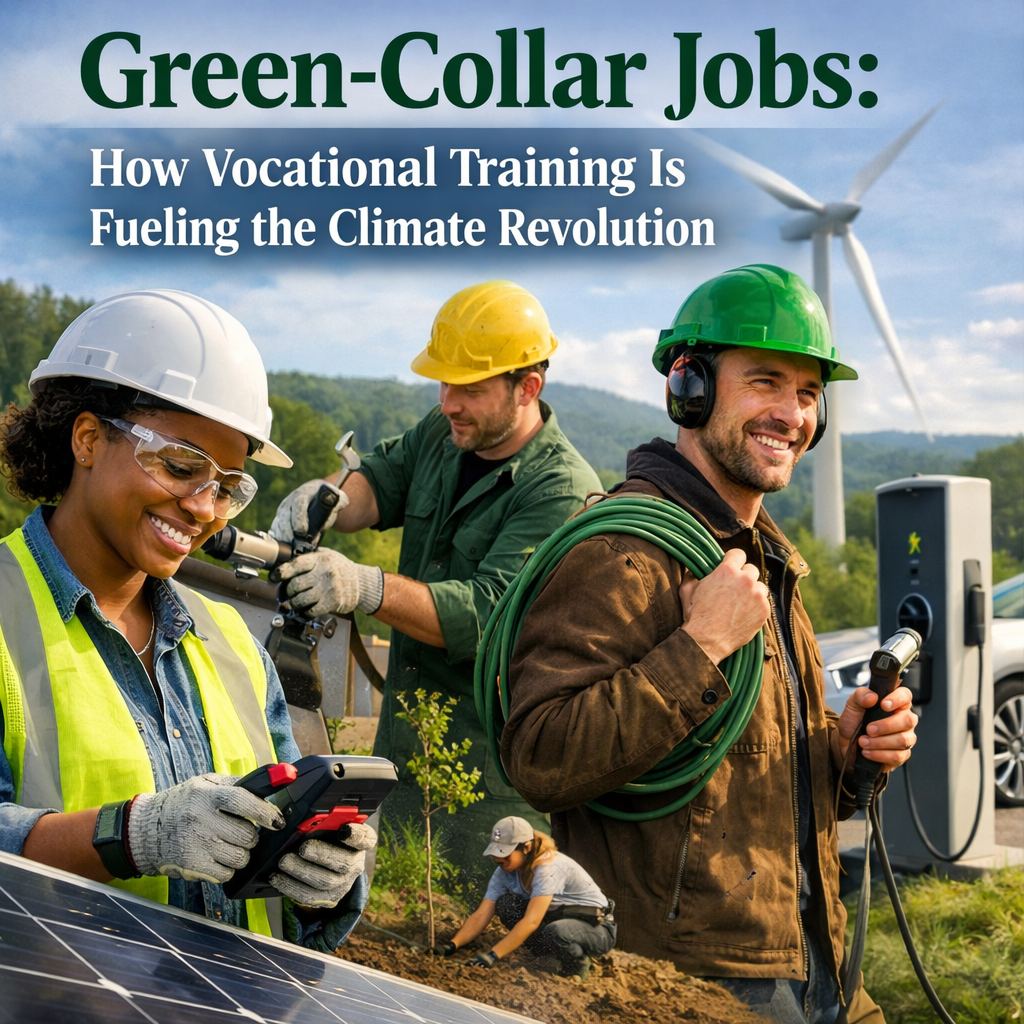
As climate change reshapes economies worldwide, a new category of employment is gaining momentum: green-collar jobs. These roles focus on sustainability, renewable energy, environmental protection, and climate resilience. At the heart of this transformation lies vocational training, equipping workers with practical skills to support the green economy and accelerate the climate revolution.
What Are Green-Collar Jobs
Green-collar jobs are roles that contribute directly to environmental sustainability. They exist across sectors and skill levels, including:
- Renewable energy technicians
- Electric vehicle maintenance specialists
- Solar panel installers
- Wind turbine technicians
- Waste management and recycling professionals
- Energy efficiency auditors
Unlike many traditional jobs, green-collar roles often require hands-on technical expertise, making vocational education a natural pathway.
Why Vocational Training Is Critical to the Green Transition
Skills Aligned With Sustainability
Vocational training programs are designed around real-world job requirements. In the green economy, this means training workers to install, maintain, and operate sustainable technologies efficiently and safely.
Faster Workforce Readiness
Climate goals demand immediate action. Vocational training offers shorter, focused programs that prepare learners for employment faster than conventional academic routes.
Accessible Pathways to Green Careers
Green-collar jobs are inclusive. Vocational training provides affordable and flexible learning options, enabling youth, mid-career workers, and displaced employees to transition into sustainable roles.
How Vocational Training Fuels Climate Action
Supporting Renewable Energy Growth
The expansion of solar, wind, and bioenergy depends on skilled technicians. Vocational institutes train workers to meet technical standards while following environmental and safety regulations.
Driving Energy Efficiency
Energy efficiency is one of the fastest ways to reduce emissions. Trained professionals help industries and households optimize energy use, lowering costs and carbon footprints.
Strengthening Local Green Economies
Vocational training creates local talent for local solutions. Skilled workers support regional sustainability projects, creating jobs while addressing environmental challenges.
Green-Collar Jobs and Economic Opportunity
The green economy is not just environmentally responsible. It is economically strategic. Green-collar jobs often provide stable incomes, long-term growth, and opportunities for entrepreneurship.
For workers, vocational training enables:
- Career resilience in a changing economy
- Transferable skills across industries
- Participation in future-focused sectors
For nations, it supports sustainable development and workforce readiness.
The Role of Industry and Policy
To scale green-collar employment, collaboration is essential. Governments, training providers, and employers must work together to align vocational curricula with climate goals and labor market needs.
Public-private partnerships help ensure training programs remain relevant as green technologies evolve.
Conclusion
Green-collar jobs represent the intersection of economic growth and environmental responsibility. Vocational training is the engine powering this shift, preparing workers with the skills needed to build a sustainable future.
As the climate revolution accelerates, investing in vocational education is not just about jobs. It is about shaping a greener, more resilient world.