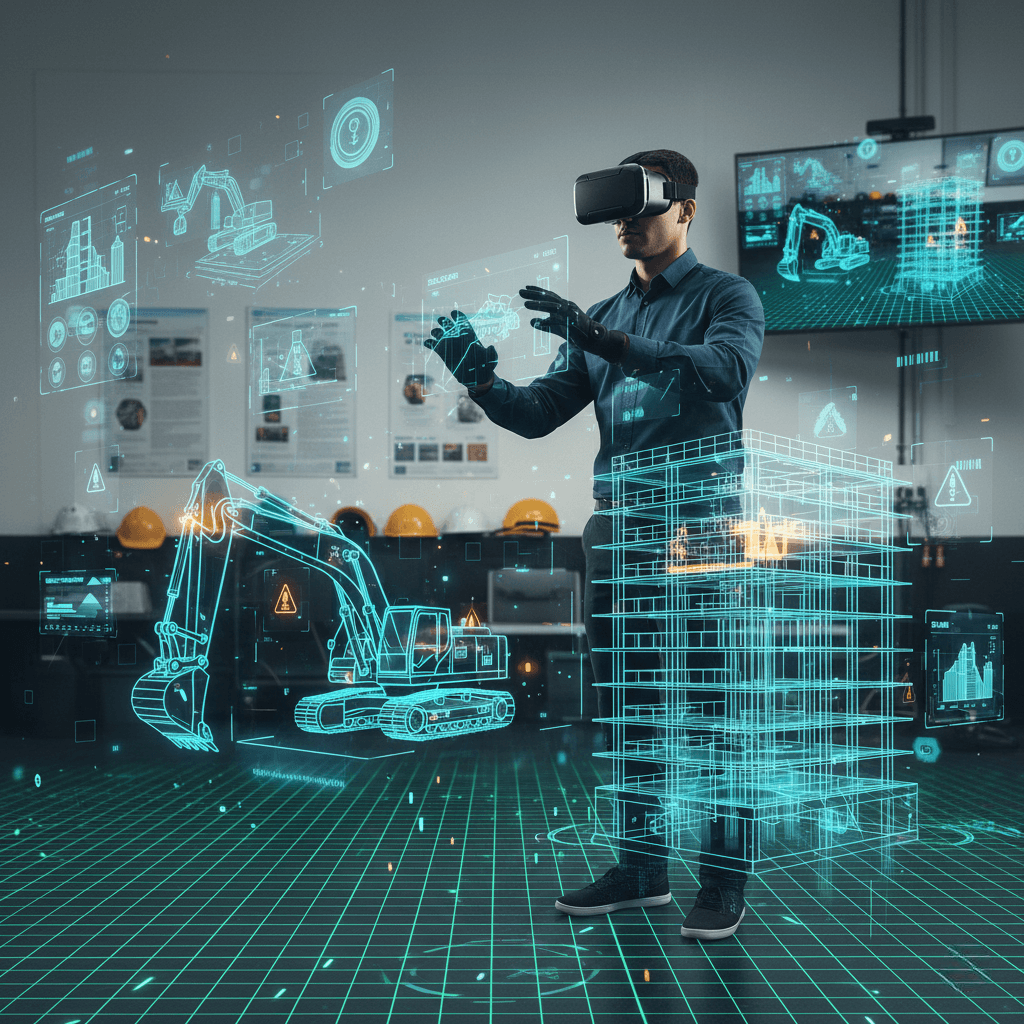
The future of job training is no longer happening in classrooms — it’s happening in virtual worlds powered by Artificial Intelligence. As VR (Virtual Reality) and AI converge, industries are now able to train workers in hyper-realistic simulations that mimic high-risk, complex, or inaccessible job sites.
From construction zones floating hundreds of feet above the ground to emergency rooms in crisis mode, VR and AI job site simulation is making the “impossible” possible.
Why VR + AI Is a Game-Changer for Skill Development
Traditionally, job training required physical spaces, equipment, supervisors, and real-world risks.
But VR combined with AI changes everything by enabling:
1. Safe, Controlled Training for High-Risk Jobs
Whether it's firefighting, electrical repair, or heavy machinery operations, workers can train in danger-free environments that still feel real.
2. Personalized Learning Paths Through AI
AI observes a trainee’s behavior, tracks mistakes, and adjusts difficulty levels—creating a fully personalized training journey.
3. Replicating Rare or Impossible Scenarios
Disaster response, equipment failure, remote job sites, or extreme weather can be simulated anytime, anywhere.
AI makes sure no two sessions are the same—training becomes adaptive, dynamic, and deeply immersive.
Industries Using VR and AI Job Site Simulation
Several sectors are leading the shift:
Construction & Infrastructure
Workers train on scaffolding, cranes, and tunnels that are too dangerous or expensive to practice on directly.
Healthcare
Simulated operating rooms with AI-driven patient responses help trainees prepare for real emergencies.
Manufacturing
Virtual assembly lines teach precision, speed, and safety without halting real production.
Defense & Emergency Services
Rescue missions, battlefield simulations, and evacuation drills become more realistic and effective.
Aviation & Transportation
Pilots and drivers train in VR cockpits powered by AI decision-making.
The Benefits: Faster, Smarter, and Safer Training
VR and AI deliver powerful advantages:
- Reduced training costs
- Zero-risk learning environments
- Real-time performance analytics
- Higher retention through experiential learning
- Scalability across locations
It’s not just training — it’s transformation.
How India Is Adopting VR + AI Training
Skill development organizations, vocational institutes, and even CSR-backed initiatives are increasingly embracing immersive training.
Platforms powered by digital twins, AI analytics, and VR modules are preparing India’s workforce for jobs that demand accuracy, confidence, and hands-on expertise.
Forward-looking organizations—including innovators like Meritude—are exploring how immersive technologies can build a future-ready talent pipeline.
Where This Technology Is Headed Next
The convergence of VR and AI is just beginning. Soon, we can expect:
- Full-body haptic suits for deeper realism
- AI mentors that talk, guide, and evaluate
- VR-driven remote collaboration
- Training that predicts risks before they happen
The future of learning is immersive—and the future of work will be built by those who train inside these virtual ecosystems.
It’s great to see India’s workforce preparing for this VR and AI transformation. High-accuracy jobs demand high-tech training! Zero-risk learning and real-time analytics. This is how you build a future-ready talent pipeline!
It’s great to see India’s workforce preparing for this VR and AI transformation. High-accuracy jobs demand high-tech training! Zero-risk learning and real-time analytics. This is how you build a future-ready talent pipeline!
It’s great to see India’s workforce preparing for this VR and AI transformation. High-accuracy jobs demand high-tech training!