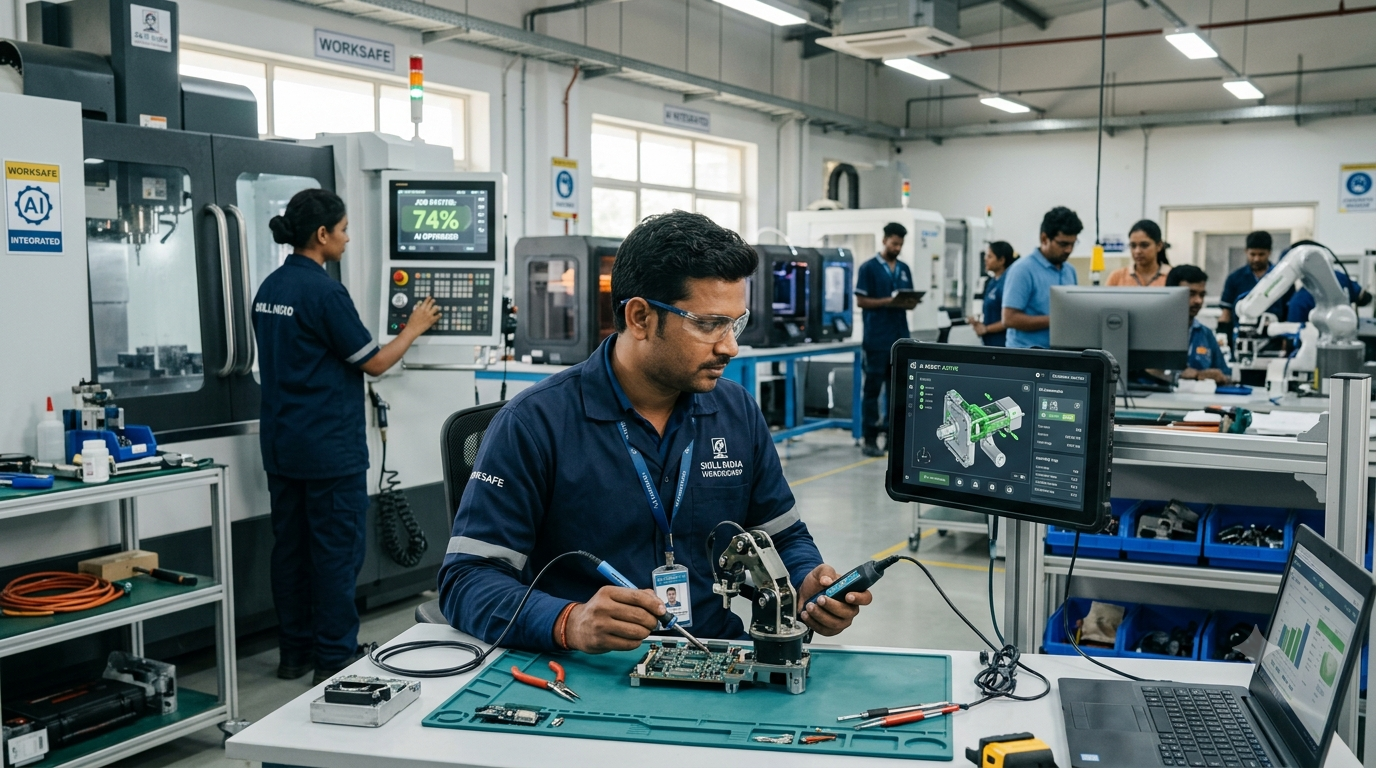
Artificial Intelligence is changing the way people work. Businesses are using AI to automate repetitive tasks, analyze information, improve customer service, and increase productivity. As these changes continue, many people are asking an important question: Will human skills still matter in an AI-driven workplace?
The answer is yes.
While AI can process information and automate many tasks, it cannot replace the value of practical experience, human judgment, communication, adaptability, and hands-on expertise. This is why vocational skills still matter in the age of AI.
In fact, as technology becomes more powerful, skilled professionals who know how to combine practical expertise with digital tools may become even more valuable.
What Makes Vocational Skills Different?
Vocational education focuses on practical knowledge and job-specific skills. Instead of concentrating only on theory, vocational training helps learners understand how to apply their knowledge in real workplace situations.
These skills are important across industries such as:
- Construction
- Healthcare
- Manufacturing
- Automotive
- Hospitality
- Retail
- Information technology
- Electrical and mechanical services
As a result, vocational education provides a direct pathway from learning to employment.
AI Can Automate Tasks, But Not Every Job
AI can perform many tasks quickly, but automation does not mean that every human role will disappear.
Many jobs require physical interaction, problem-solving, judgment, creativity, and communication. For example, an electrician may use digital tools to diagnose an issue, but practical knowledge is still necessary to safely repair the system.
Similarly, healthcare professionals can use AI to support diagnosis and record management, but human interaction and professional judgment remain essential.
Therefore, AI often works best as a tool that supports skilled professionals rather than simply replacing them.
Hands-On Expertise Has a Human Advantage
One of the biggest strengths of vocational skills is hands-on experience.
A trained technician understands how equipment behaves in real-world conditions. A construction professional knows how to respond when site conditions change. A hospitality worker understands how to handle an unexpected customer situation.
These experiences involve judgment and adaptability.
In addition, real-world environments rarely follow predictable patterns. Professionals must observe situations, identify problems, and make decisions based on experience.
AI can provide useful information, but skilled workers still need to apply that information effectively.
The Rise of Human-AI Collaboration
The future of work is increasingly about collaboration between people and technology.
A skilled professional who knows how to use AI can work more efficiently than someone who relies only on traditional methods. For instance, a technician can use AI-assisted diagnostic tools to identify potential equipment problems before carrying out a physical inspection.
Likewise, a digital marketing professional can use AI to generate ideas while applying human creativity and industry knowledge to develop the final campaign.
As a result, combining vocational expertise with AI literacy can create a powerful professional advantage.
Soft Skills Are Becoming More Valuable
Technical knowledge is important, but employers also need people who can communicate, collaborate, and solve problems.
Important human skills include:
- Communication
- Critical thinking
- Teamwork
- Problem-solving
- Creativity
- Adaptability
- Customer service
Moreover, these skills help professionals work effectively with both people and technology.
As AI handles more routine activities, employees may have more opportunities to focus on tasks that require judgment, collaboration, and relationship building.
Vocational Training Must Evolve With Technology
The growing importance of AI does not make vocational training less relevant. Instead, it creates an opportunity to modernize it.
Training programs can combine traditional practical instruction with digital skills. Learners can develop technical expertise while also learning how modern technologies affect their chosen industries.
For example, a manufacturing trainee may learn traditional equipment operation alongside automation systems and digital monitoring tools.
Therefore, the future of vocational education should not be about choosing between practical skills and technology. It should combine both.
Creating Future-Ready Skilled Professionals
Industries are changing quickly. New technologies are creating new roles while also changing existing ones.
Because of this, workers need opportunities to continuously upgrade their skills. Upskilling and reskilling can help professionals remain competitive as workplace requirements evolve.
Skill development organizations and training providers can support this transition by connecting learners with practical, industry-relevant learning pathways. Meritude, for example, supports skill-based learning that can help individuals prepare for changing career requirements and explore opportunities in an evolving job market.
Why Employers Still Need Skilled Workers
Businesses need more than technology. They need people who understand how to apply technology effectively.
A company may have advanced AI systems, but trained professionals are still needed to operate equipment, manage customers, maintain infrastructure, solve unexpected problems, and make decisions.
In other words, technology can improve the way work gets done, but skilled people remain central to putting that technology into practice.
The Future Belongs to Adaptable Professionals
The most valuable professionals of the future may not be those who know only traditional skills or only AI tools. Instead, they may be people who can combine both.
A skilled worker who continues learning can adapt to new technologies without losing the practical knowledge that makes their role valuable.
Furthermore, this mindset creates greater opportunities for career development. Professionals can build on existing expertise while developing new digital capabilities.
Conclusion
The rise of AI is changing the workplace, but it does not diminish the importance of vocational skills. Instead, it highlights the value of professionals who can combine practical expertise, human judgment, and modern technology.
Vocational skills provide the hands-on foundation that many industries still depend on. When these skills are combined with AI literacy, communication, critical thinking, and adaptability, they can create a workforce that is both capable and future-ready.
Ultimately, the human advantage is not about competing against AI. It is about learning how to work with it while continuing to develop the practical skills that technology cannot easily replace.