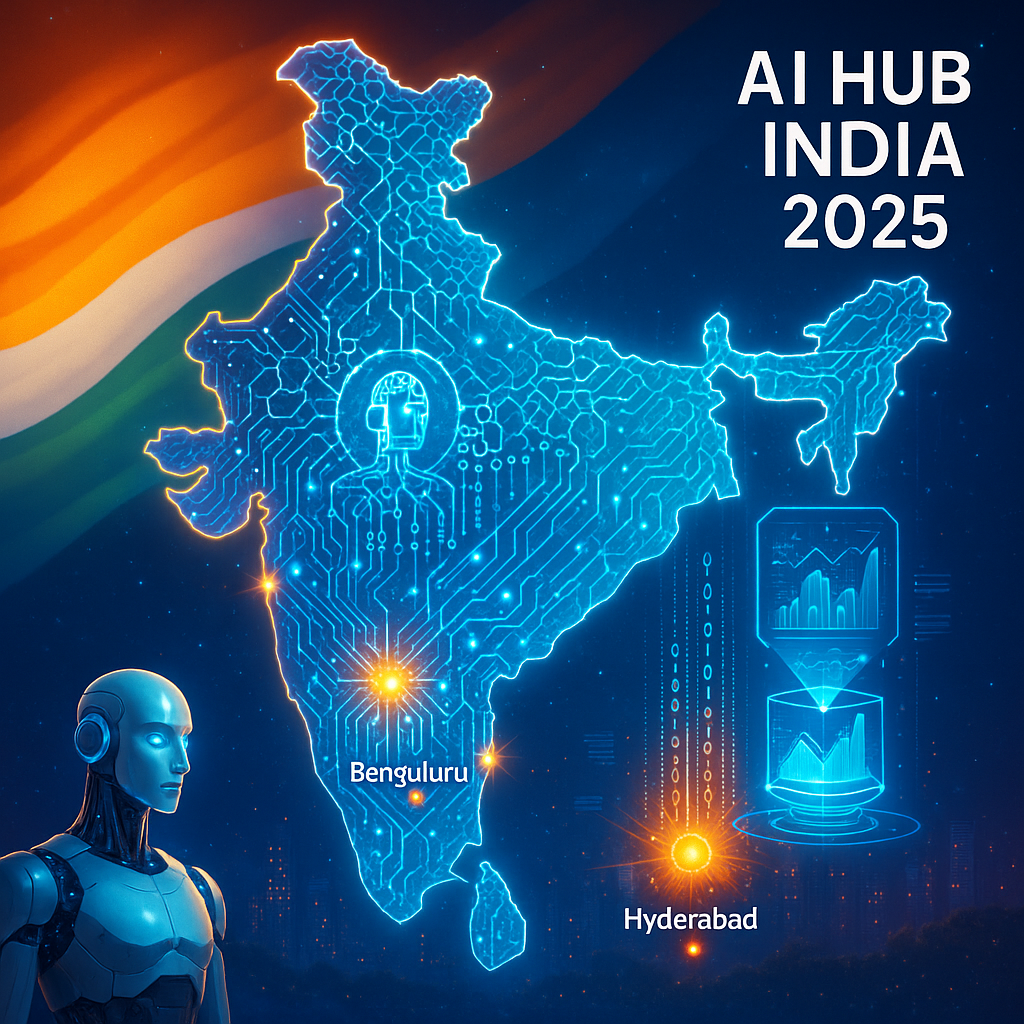
Artificial Intelligence (AI) is rapidly reshaping industries, economies, and societies worldwide — and India stands at the centre of this transformation. With a young workforce, a thriving digital ecosystem, and strong policy momentum, India has the potential to become a global AI powerhouse. But this journey comes with its own set of challenges.
Risks of AI Disruption in India
While AI promises economic growth, it also brings significant disruption, particularly in routine, entry-level jobs.
- High-exposure roles: About 26% of India’s workforce is in occupations at high risk of automation.
- Gender disparity: Women are overrepresented in roles that are more automatable, making them disproportionately vulnerable.
- Service sector vulnerability: Many IT and outsourcing roles involve repetitive, low value-added tasks, which are prime candidates for automation.
Globally, women face a higher automation risk — in high-income countries, 7.6% of female jobs are at high risk compared to 3.5% of male jobs. This trend is echoed in India.
Opportunities AI Brings to India
Despite the risks, AI offers massive growth potential if India acts strategically:
- Expanding Digital Public Infrastructure (DPI): India’s robust DPI stack is enabling innovation in finance, healthcare, and governance.
- Government Initiatives: Programmes like FutureSkills Prime, the IndiaAI Mission, and Centres of Excellence (CoEs) in emerging tech are driving AI adoption and skilling.
- Growing Domestic AI Market: Rapid adoption in healthcare, education, and governance is creating new opportunities for startups, SMEs, and enterprises.
Sectoral Impact: Jobs at Risk and New Roles Emerging
| Sector | At-Risk Roles | Emerging AI Roles |
|---|---|---|
| IT & Outsourcing | Junior coders, data entry | AI/ML engineers, prompt engineers |
| Finance | Credit analysts, risk modelers | AI risk analysts, fraud detection experts |
| Healthcare | Radiologists, diagnostics | AI imaging specialists, health data analysts |
| Education | Grading assistants, tutors | EdTech developers, AI curriculum specialists |
| Legal | Junior associates, paralegals | Legal tech analysts, AI compliance officers |
| Customer Service | Call centre agents | Conversational AI designers, bot trainers |
| Manufacturing | Assembly line workers | Smart factory engineers, AI maintenance technicians |
| Logistics & Retail | Inventory managers | AI supply chain analysts, demand forecasting experts |
The takeaway? AI is both eliminating and creating jobs — but the new roles demand advanced digital and problem-solving skills.
The Way Forward
To turn disruption into opportunity, India must:
- Invest in large-scale reskilling to prepare workers for hybrid and AI-enabled roles.
- Ensure gender-inclusive AI strategies to prevent widening disparities.
- Leverage policy momentum to foster innovation while protecting workers’ rights.
- Promote AI literacy from school to workforce levels.
Key Takeaways
- AI is a double-edged sword for India — capable of displacing jobs but also creating high-value careers.
- The sectors most affected include IT, finance, healthcare, education, and legal services.
- Strategic skilling, inclusion, and policy action can help India emerge as a global leader in AI talent.
The question is — will India be a passive participant in the AI revolution, or will it shape the future of work for itself and the world?