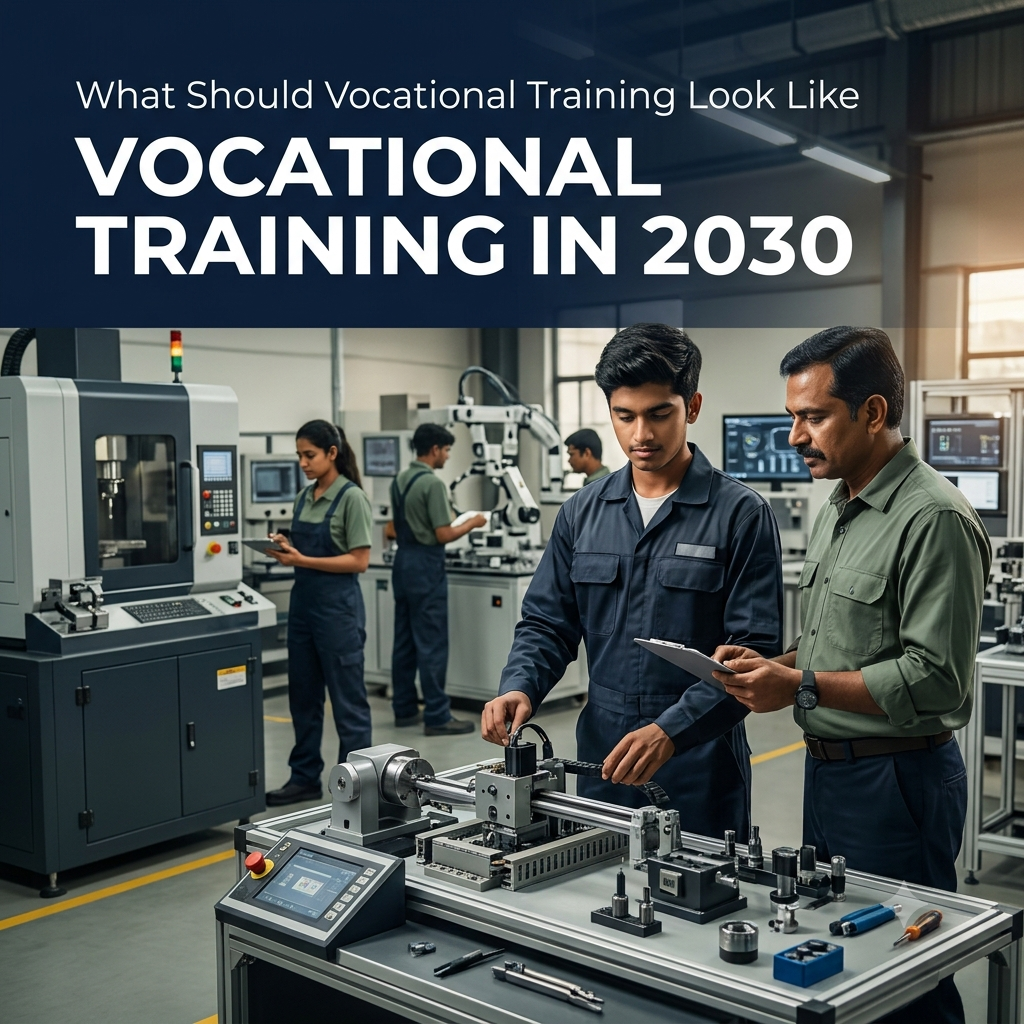
The world of work is changing faster than ever. Artificial intelligence, automation, and digital technology are transforming industries. As a result, employers need workers with new skills and the ability to adapt.
For India, this shift creates both opportunities and challenges. The country has a large workforce with strong potential. However, traditional training methods may not be enough to prepare people for future jobs.
Vocational training in 2030 must go beyond teaching technical skills. It should help learners gain practical experience, use modern technology, and prepare for changing industry needs.
So, what should vocational training look like in 2030? The answer lies in flexible learning, stronger industry partnerships, and a greater focus on employment outcomes.
Why Vocational Training Needs to Change Before 2030
Traditional vocational training often follows a fixed curriculum. Students attend classes, complete practical sessions, and receive certificates.
While this approach builds basic skills, industries are changing rapidly. Therefore, training programs must evolve to remain relevant.
According to the World Economic Forum's Future of Jobs Report 2025, technological change and other major trends will reshape jobs and skills by 2030.
This means workers will need to update their skills more frequently.
For example, manufacturing workers may need to operate automated machines. Retail employees may need to use digital customer management tools. Similarly, technicians may need to understand smart equipment and connected systems.
Therefore, vocational education must prepare learners for both current jobs and future changes.
1. Training Should Focus on Practical Skills
Practical learning should remain at the centre of vocational training in 2030.
Employers need people who can perform tasks confidently. However, classroom knowledge alone cannot always provide this experience.
Training centres should offer more opportunities to work with real tools, equipment, and industry processes.
Future training programs should include:
- Hands-on workshops and practical assignments.
- Real-world projects based on industry needs.
- Workplace simulations and skill assessments.
- Internships and apprenticeship opportunities.
- Training with modern tools and equipment.
For example, an electrical trainee should practise installing and maintaining electrical systems. Similarly, a manufacturing trainee should learn how to operate equipment safely.
These activities help learners build confidence and understand workplace expectations.
By 2030, practical competence should matter as much as certification.
2. Digital Skills Should Be Part of Every Training Program
Digital technology is becoming part of almost every industry. As a result, digital literacy should no longer be limited to IT-related courses.
Workers in manufacturing, healthcare, retail, logistics, and construction increasingly use digital tools.
For example, warehouse employees may use inventory software. Healthcare workers may work with digital records. Meanwhile, technicians may use connected devices to monitor equipment.
Therefore, vocational training should introduce relevant digital skills across different trades.
These may include:
- Basic computer and internet skills.
- Digital communication and collaboration.
- Industry-specific software applications.
- Data handling and digital safety.
- Responsible use of AI-powered tools.
However, not every learner needs advanced programming knowledge. The goal is to help workers use the technology relevant to their jobs.
This approach can make vocational training more useful across different industries.
3. AI and Automation Should Support Learning
Artificial intelligence is changing how businesses operate. It can also improve how vocational training is delivered.
By 2030, AI-powered learning tools could help trainers create more flexible and personalised learning experiences.
For example, AI systems may identify areas where learners need additional practice. They could also suggest exercises based on individual progress.
Training centres may use technology for:
- Personalised learning recommendations.
- Interactive practice and assessments.
- Learning progress tracking.
- Digital training materials.
- Simulated workplace situations.
However, technology should support trainers rather than replace them.
Human instructors remain important for teaching practical skills, ensuring safety, and guiding learners through workplace challenges.
Therefore, the future of vocational training should combine digital tools with experienced trainers and hands-on learning.
4. Industry Partnerships Must Become Stronger
One major challenge in vocational education is the gap between training and employment.
Sometimes, candidates complete courses but struggle to find suitable jobs. This can happen when training content does not match employer requirements.
By 2030, training providers should work more closely with industries throughout the learning process.
For example, employers can help identify skill gaps and suggest curriculum updates. They can also provide practical projects, apprenticeships, and workplace exposure.
Strong partnerships can support:
- Industry-relevant course development.
- Training on current workplace technologies.
- Guest sessions by industry professionals.
- Apprenticeships and on-the-job training.
- Better connections between training and recruitment.
India's National Skill Development Corporation (NSDC) is part of the country's wider effort to strengthen skill development and industry participation.
Closer cooperation between employers and training providers can help learners prepare for real job requirements.
5. Soft Skills Will Be as Important as Technical Skills
Technical knowledge helps workers perform specific tasks. However, workplace success also depends on how people communicate, collaborate, and solve problems.
As technology handles more routine activities, human skills will remain valuable.
Therefore, vocational training in 2030 should place greater emphasis on employability skills.
Important skills include:
- Communication: Sharing information clearly with colleagues and customers.
- Problem-solving: Finding practical solutions to workplace challenges.
- Teamwork: Working effectively with people from different backgrounds.
- Adaptability: Learning new methods when job requirements change.
- Time management: Completing tasks responsibly and efficiently.
For example, a skilled technician may know how to repair equipment. However, the technician must also explain problems, follow safety instructions, and coordinate with colleagues.
Combining technical knowledge with workplace skills can help candidates become more employable.
6. Learning Should Be Flexible and Continuous
In the past, many workers completed their education before starting a career. However, this approach is becoming less practical.
Technology and industry requirements continue to evolve. As a result, workers may need new skills several times during their careers.
By 2030, vocational training should support continuous learning.
Training providers can introduce flexible options such as:
- Short-term skill development courses.
- Weekend and part-time training.
- Online learning combined with practical sessions.
- Modular certifications.
- Refresher programs for working professionals.
For example, a machine operator may need additional training when a factory introduces automated equipment.
Instead of completing an entirely new course, the worker could take a short program focused on the required skills.
This approach can make reskilling and upskilling more accessible.
Moreover, it can help employers develop their existing workforce rather than relying only on new recruitment.
7. Green Skills Should Become a Training Priority
Sustainability is creating new skill requirements across industries.
Renewable energy, electric vehicles, energy-efficient buildings, and waste management are some areas where workers may need specialised training.
As a result, green skills should become an important part of vocational education.
For example, training programs may cover:
- Solar panel installation and maintenance.
- Electric vehicle servicing.
- Energy-efficient electrical systems.
- Sustainable construction practices.
- Waste management and resource efficiency.
However, green skills should not be limited to new occupations.
Existing workers can also learn safer and more resource-efficient ways to perform their jobs.
For instance, construction workers can learn methods that reduce material waste. Similarly, manufacturing employees can understand energy-saving practices.
By introducing relevant green skills, vocational training can help workers prepare for changing industry demands.
8. Training Success Should Be Measured Through Employment Outcomes
Training centres often measure success through enrolments, course completions, and certificates issued.
These numbers are useful. However, they do not always show whether learners are ready for employment.
By 2030, vocational training should focus more strongly on measurable outcomes.
Training providers should track:
- How many candidates complete their courses.
- How many demonstrate practical competence.
- How many find suitable employment.
- How many remain employed after placement.
- Whether employers are satisfied with their skills.
- Whether candidates experience career or income growth.
For example, a training centre may certify hundreds of students. However, the real impact depends on whether those students can apply their skills and find meaningful opportunities.
Therefore, training institutions should collect feedback from both employers and former trainees.
This information can help them improve courses and identify changing skill requirements.
The future of vocational education should focus on career outcomes, not just training numbers.
9. Vocational Training Must Be Accessible to Everyone
India has a diverse workforce. However, access to quality training can vary across regions and communities.
Some learners live far from training centres. Others may face financial challenges or have limited access to digital resources.
Therefore, vocational training in 2030 should become more inclusive and accessible.
Training providers can improve access through local training centres, affordable courses, flexible schedules, and blended learning models.
In addition, career counselling and placement assistance can help learners understand available opportunities.
Digital learning can also expand access. However, practical training must remain available for occupations that require hands-on experience.
By reducing barriers to learning, India can help more people participate in workforce development.
10. Trainers Must Also Be Prepared for the Future
Modern equipment and updated courses are important. However, training quality also depends on the skills of instructors.
By 2030, vocational trainers will need to understand changing technologies and workplace practices.
Therefore, regular trainer development should become a priority.
Training institutions can support instructors through industry exposure, refresher courses, digital teaching tools, and practical workshops.
For example, a trainer teaching manufacturing skills should stay familiar with modern machinery and safety procedures.
Similarly, trainers working in digital fields should understand relevant software and emerging tools.
When trainers continue learning, they can provide more relevant guidance to students.
As a result, instructor development can improve the overall quality of vocational education.
The Role of Skill Development Organisations in Preparing for 2030
Preparing India's workforce for 2030 requires more than updating training materials. It also requires stronger connections between education, industry, and employment.
Skill development organisations can support this transition by identifying industry needs and delivering practical training.
They can also help learners develop workplace skills, understand career opportunities, and prepare for recruitment.
Organisations such as Meritude, which works in vocational training, skill development, and recruitment, operate within this important connection between learning and employment.
As industries evolve, training providers have an opportunity to support more flexible, industry-focused, and employment-oriented learning.
By combining technical training with practical experience and career preparation, the skilling ecosystem can help learners build skills that remain useful in changing workplaces.
Conclusion: Building a Future-Ready Workforce by 2030
Vocational training in 2030 should look different from traditional training models.
It should combine practical learning, digital skills, industry partnerships, and continuous development. Moreover, it should prepare learners to adapt as technologies and job requirements change.
AI-powered tools, green skills, and flexible courses can improve training opportunities. However, strong instructors and real workplace experience will remain essential.
For India, the goal should not simply be to train more people. It should be to help people develop relevant skills, secure meaningful employment, and progress in their careers.
Achieving this goal will require cooperation between governments, employers, training institutions, and skill development organisations.
Ultimately, vocational training in 2030 should prepare people not only for their first job, but also for a lifetime of learning, adaptability, and career growth.