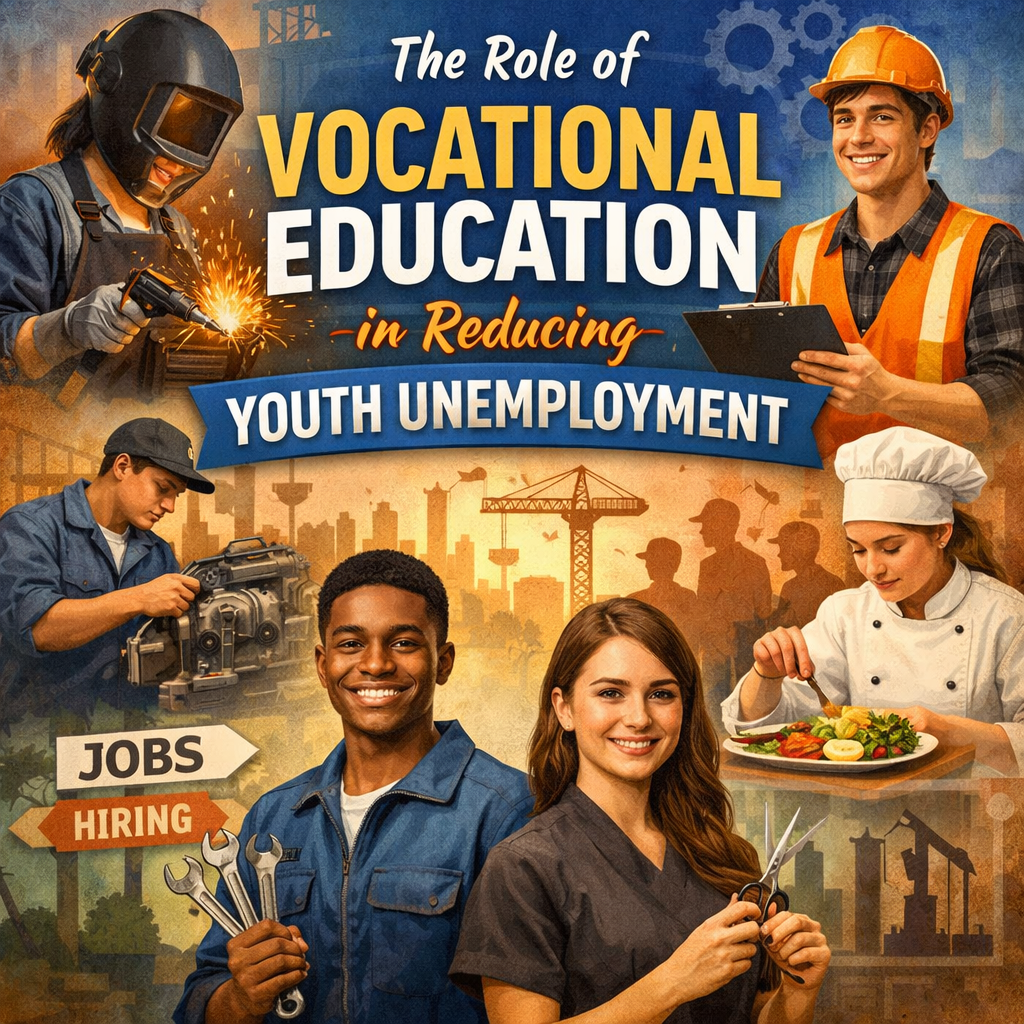
Youth unemployment continues to challenge economies across the world. While industries report talent shortages, millions of young people struggle to secure stable jobs. This contradiction reveals a critical gap between what traditional education provides and what employers actually need.
Vocational education plays a decisive role in closing that gap.
Understanding the Skills Mismatch
Many graduates leave formal education with theoretical knowledge but limited exposure to real-world applications. Employers, however, increasingly prioritize practical skills, workplace readiness, and adaptability.
As industries evolve due to automation, digitalization, and sustainability shifts, job requirements change faster than conventional academic curricula. Consequently, young job seekers often find themselves underprepared despite holding qualifications.
Vocational training addresses this issue directly by aligning learning outcomes with labor market demands.
Practical Skills That Translate Into Employment
Unlike purely academic pathways, vocational education focuses on applied learning. Students gain hands-on experience in sectors such as construction, healthcare support, electrical systems, manufacturing, and digital services.
This practical approach builds confidence and competence simultaneously. Because learners train in environments that simulate actual workplaces, they transition more smoothly into employment. Employers benefit as well, since they hire individuals who can contribute from day one.
As a result, the time between graduation and meaningful employment shortens significantly.
Strengthening Local Economies
Reducing youth unemployment is not only about individual success. It also strengthens communities. When young people enter the workforce earlier, they contribute to household income, local businesses, and regional economic stability.
Small and medium enterprises, in particular, rely heavily on job-ready talent. Vocational institutions help supply that workforce, enabling businesses to expand and innovate.
Workforce-aligned ecosystems that quietly integrate training, assessment, and employability support, including structured platforms like Meritude, reflect how modern systems are evolving to connect learners with real opportunities rather than abstract credentials.
Encouraging Entrepreneurship and Self-Reliance
Vocational education does more than prepare students for employment. It also equips them with skills to start their own ventures. Electricians, technicians, digital service providers, and skilled trades professionals often establish small enterprises that create additional jobs within their communities.
Therefore, vocational training produces not only employees but also job creators.
This multiplier effect is especially important in regions where formal employment opportunities are limited.
Adapting to a Changing World of Work
Technological change has transformed the employment landscape. While automation replaces some repetitive roles, it simultaneously creates demand for technically skilled professionals who can install, maintain, and manage new systems.
Vocational education adapts more quickly to these shifts. Programs can update curricula based on industry requirements, ensuring relevance and responsiveness.
In contrast, traditional academic pathways may take longer to evolve.
A Sustainable Path Forward
Addressing youth unemployment requires more than policy discussions. It demands practical solutions that bridge education and industry. Vocational training provides that bridge by equipping young people with skills that match market demand.
When education systems prioritize employability, industry collaboration, and hands-on learning, youth unemployment declines. At the same time, economies benefit from a more resilient and capable workforce.
Ultimately, vocational education is not an alternative option. It is a strategic solution. By investing in skill-based learning and structured employability pathways, societies can transform the challenge of youth unemployment into an opportunity for long-term growth.