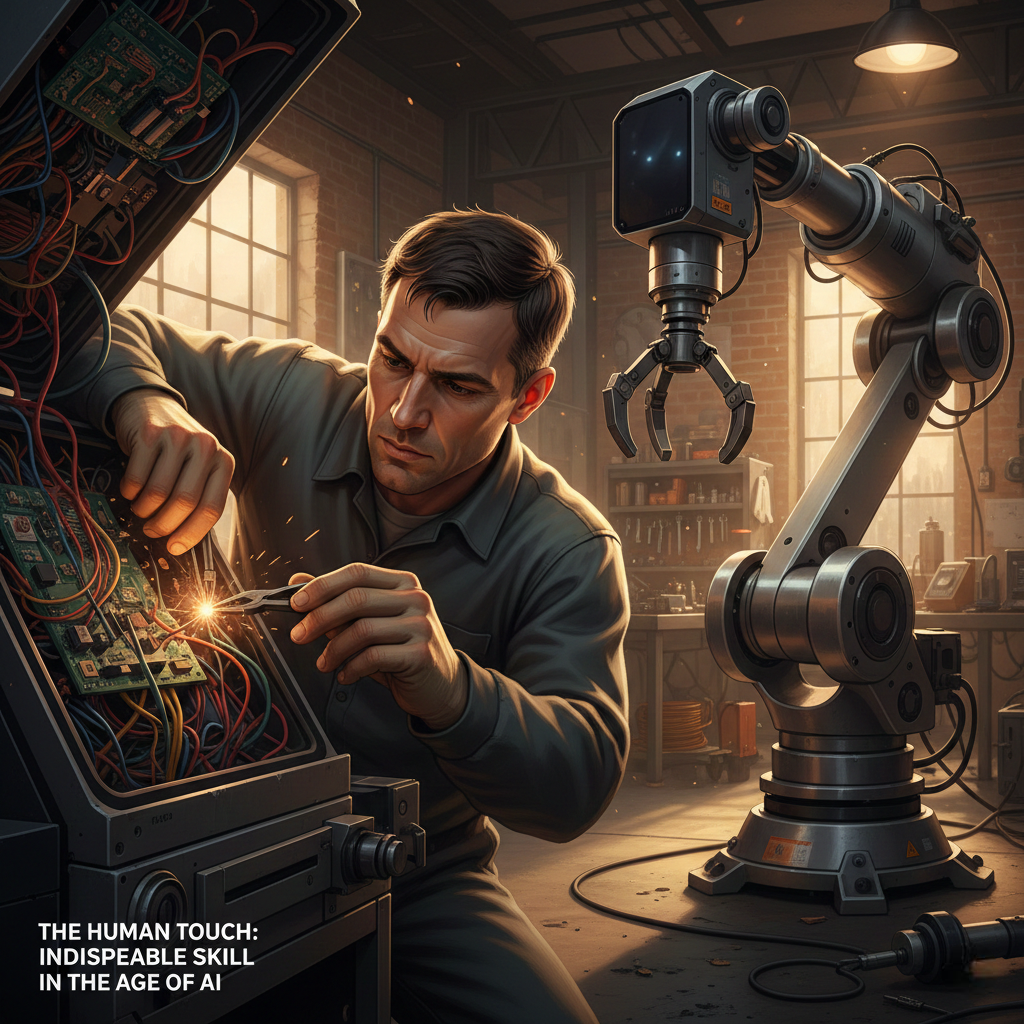
Automation is rapidly changing how work gets done. Robotic arms assemble cars, wire factories, and package products with impressive precision. Yet when it comes to the tangled, unpredictable world of real wiring, human hands remain unmatched.
From electrical installations to maintenance and repair, working with wires demands judgment, adaptability, and experience. These are qualities machines still struggle to replicate.
The Reality of Hands-On Electrical Work
No two wiring jobs are identical. Older buildings hide outdated systems, undocumented changes, and unexpected safety risks. Electricians and technicians must interpret situations in real time, often making split-second decisions that balance safety, efficiency, and functionality.
Robotic systems perform best in controlled environments. On-site electrical work rarely offers that luxury.
Why Robotic Arms Fall Short
Robots follow instructions. Skilled workers interpret intent. When a circuit behaves unexpectedly or a connection overheats, human intuition steps in. Touch, sound, and even smell help technicians diagnose problems that data alone cannot explain.
This kind of situational awareness is built through hands-on practice, not algorithms.
Vocational Training as the Competitive Advantage
Vocational training equips learners with more than technical knowledge. It builds muscle memory, safety instincts, and problem-solving habits developed only through real-world exposure.
As industries modernize, the demand is not just for people who understand technology, but for those who can work confidently with it. Training ecosystems that prioritize employability and practical skills, like those quietly shaping outcomes at Meritude, reflect this shift toward job-ready learning.
Technology as a Tool, Not a Replacement
Digital tools, smart diagnostics, and AI-assisted planning are becoming common in electrical work. However, these technologies amplify human capability rather than replace it. The final responsibility still rests with skilled hands that know how to adapt when systems behave unexpectedly.
The future belongs to technicians who can balance digital awareness with physical expertise.
Why Human Skill Still Wins
Wrestling with wires requires patience, dexterity, and accountability. These are deeply human strengths. As automation accelerates, they are becoming more valuable, not less.
Vocational careers rooted in hands-on skill are proving to be some of the most resilient paths forward. In a world increasingly shaped by machines, human expertise remains the ultimate safeguard.