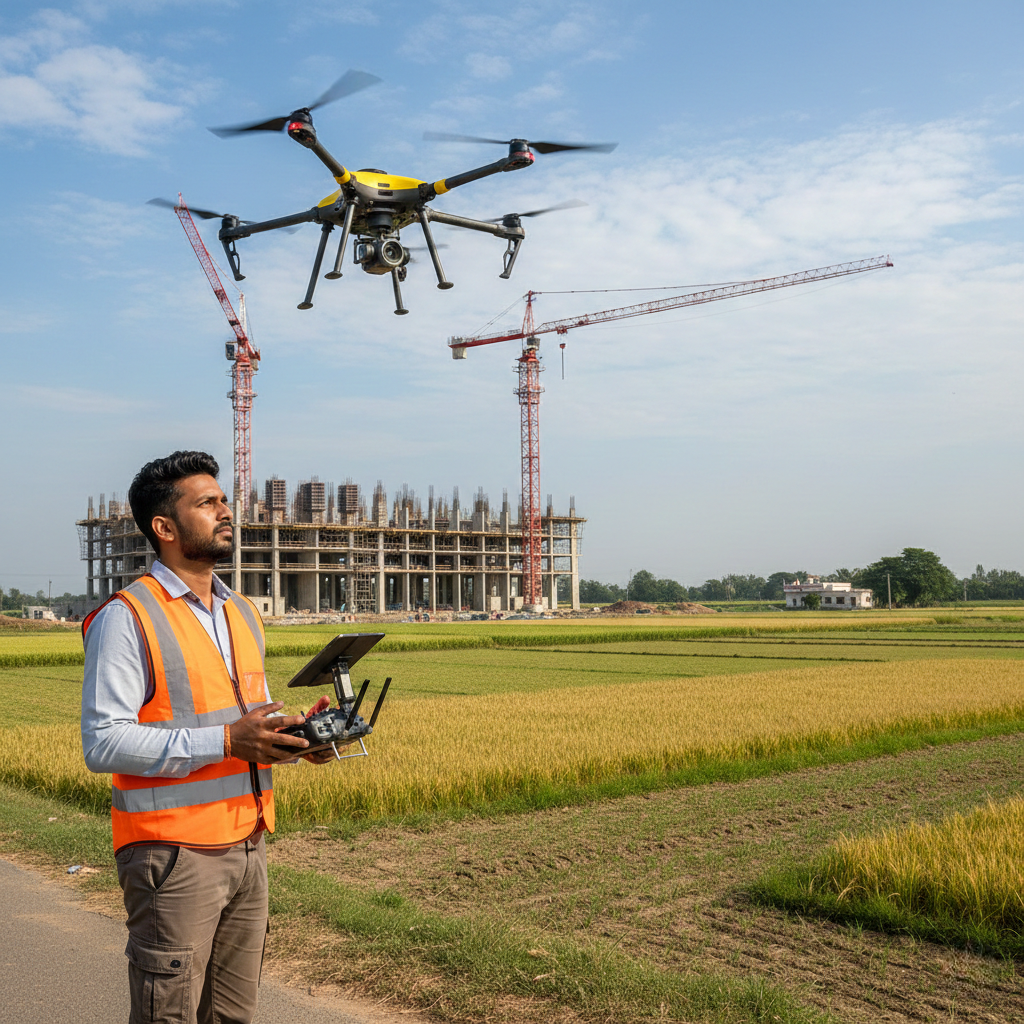
Once associated mainly with photography and hobbyists, drones are now reshaping some of the most traditional industries. Construction sites and farms are increasingly relying on drone pilots to collect data, improve efficiency, and reduce risk. What was once a novelty has become a serious career path, blending technology with hands-on, outdoor work.
Why Drone Pilots Are in High Demand
Construction and agriculture are under pressure to become faster, safer, and more precise. Drones offer a solution by providing real-time aerial insights that were previously expensive or impossible to obtain.
Drone pilots help organizations:
- Survey land quickly and accurately
- Monitor crop health and irrigation
- Inspect buildings, bridges, and equipment safely
- Track progress on large construction sites
As adoption grows, so does the demand for trained drone operators who understand both the technology and the industry they serve.
Drones in Construction: A New View from Above
In construction, drones are used for site mapping, volumetric measurements, and progress reporting. A single drone flight can replace hours of manual surveying while delivering detailed visual and spatial data.
Drone pilots work closely with engineers and project managers, helping reduce delays, improve safety, and ensure projects stay on track. This role requires more than flying skills. Understanding construction workflows and safety standards is equally important.
Drones in Farming: Smarter Agriculture from the Sky
Agriculture is undergoing a digital transformation, and drones are at the center of it. Farmers use drones to monitor crop health, detect pest infestations, assess soil conditions, and optimize water usage.
Drone pilots translate aerial data into actionable insights, helping farmers increase yields while reducing costs and environmental impact. For those who enjoy working outdoors and with technology, this career offers a unique blend of both.
Skills Needed to Become a Drone Pilot
Successful drone pilots combine technical skill with practical understanding. Key skills include:
- Drone flight control and safety procedures
- Basic data analysis and mapping software
- Knowledge of construction or agricultural operations
- Compliance with aviation regulations
Vocational and skills-based training programs are increasingly stepping in to prepare workers for these roles, focusing on real-world applications rather than theory alone.
A Career That Feels Less Like Work
One reason drone piloting is gaining popularity is that it feels engaging and dynamic. Pilots work across different locations, industries, and projects. No two days look the same.
This role also highlights a broader shift in the job market toward hybrid careers that combine digital tools with physical environments. Workforce-focused platforms like Meritude subtly reflect this evolution by emphasizing skills that align with emerging, tech-enabled roles.
The Future of Drone Pilots
As regulations mature and technology advances, drones will become even more embedded in construction and farming. From precision agriculture to smart infrastructure monitoring, drone pilots will play a critical role in shaping efficient and sustainable operations.
For those seeking a future-ready career that mixes technology, mobility, and real-world impact, becoming a drone pilot may be one of the most exciting paths available today.