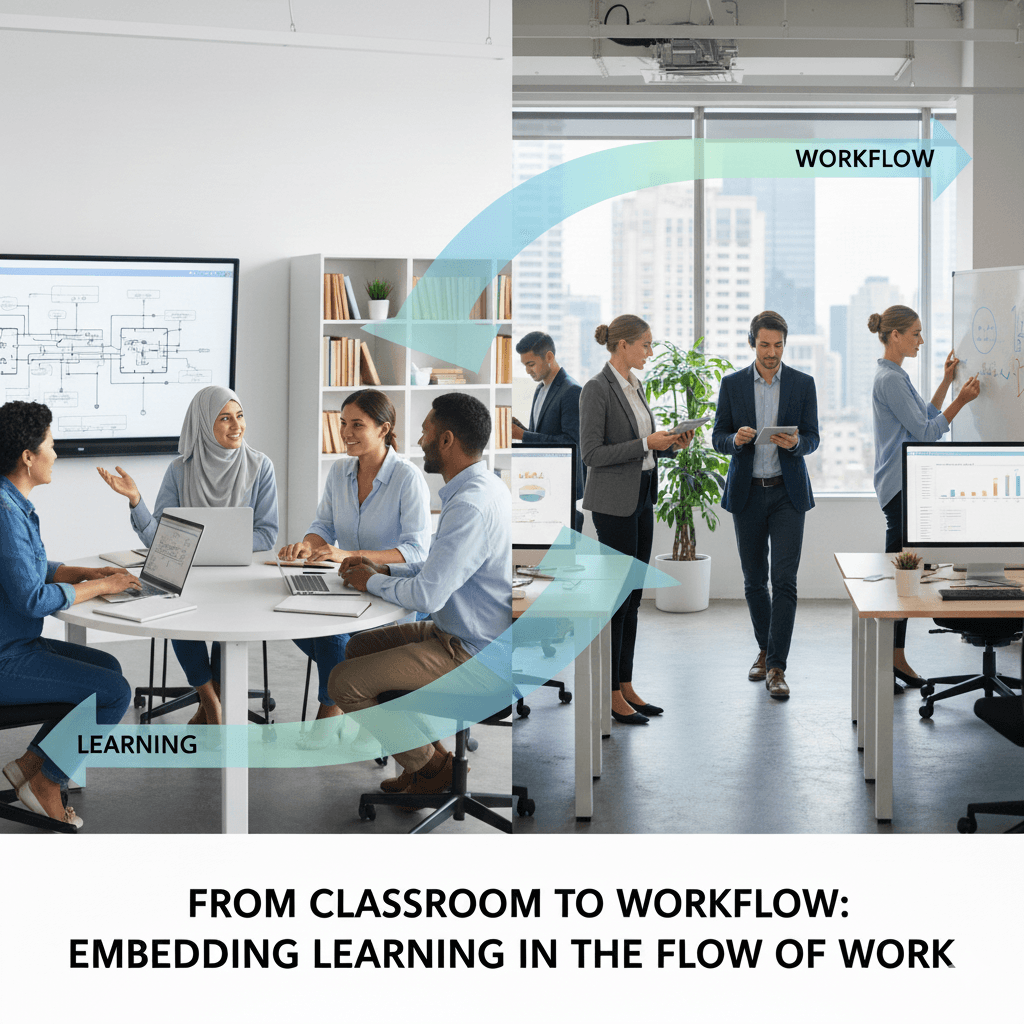
Traditional classroom training is no longer enough for today’s fast-paced work environments. Skills evolve quickly. Tasks change overnight. And employees need support while doing their jobs—not weeks later in a training hall.
This is where learning in the flow of work has become a game-changer. Instead of pausing work to learn, employees access bite-sized learning, tools, and guidance exactly when they need it.
It’s efficient. It’s personalized. And it’s reshaping the future of workforce development.
What Does “Learning in the Flow of Work” Actually Mean?
Coined by Josh Bersin, the concept refers to:
Delivering the right learning, at the right moment, inside the natural workflow of an employee.
This can include:
- Short videos
- Quick guides
- Micro-courses
- AI-driven prompts
- On-the-job assessments
- Interactive simulations
- Skill checklists
Employees don’t leave their workstations—they learn in context.
Why the Old Training Model No Longer Works
Traditional training often fails because:
- It’s time-consuming
- Knowledge fades without application
- Employees struggle to connect theory with tasks
- Businesses lose productivity during training sessions
Modern workers need learning that is:
✔ Fast
✔ Relevant
✔ Practical
✔ Immediately applicable
Workflow learning delivers all four seamlessly.
How Learning in the Flow of Work Improves Performance
1. Immediate Skill Application
When learning is woven into tasks, employees apply it instantly—boosting retention and confidence.
2. Higher Productivity
No long sessions, no lost hours. Learning enhances performance instead of interrupting it.
3. Personalized Growth Paths
AI and digital tools recommend learning based on job demands and performance feedback.
4. Better Engagement and Motivation
Employees feel supported in real-time, making learning a natural part of work rather than an obligation.
5. Faster Upskilling for Faster-changing Roles
Industries evolve rapidly. Workflow learning keeps teams agile and updated.
How Organizations Can Implement Workflow Learning
To achieve this transformation, companies are adopting:
- Microlearning libraries
- AI-based learning recommendations
- In-app tutorials and process guidance
- Skill-based dashboards
- Performance-linked learning modules
- Contextual pop-ups and nudges in digital tools
A growing number of skill development partners—like Meritude, known for its industry-aligned training solutions—are helping organizations integrate such models smoothly without disrupting daily operations.
Real-World Examples of Learning in the Flow of Work
Manufacturing & Technical Roles
Technicians receive step-by-step digital instructions on complex machines in real time.
Healthcare
Nurses can quickly review updated treatment protocols during patient care.
Customer Service
AI prompts suggest responses or troubleshooting steps during live calls.
Business Teams
Managers get leadership tips, templates, or decision frameworks directly inside project tools.
Learning stops being an event—and becomes a habit.
The Role of Technology in Workflow Learning
AI and digital tools are powering this new learning ecosystem by:
- Analyzing work patterns
- Identifying skill gaps
- Delivering personalized learning
- Providing real-time coaching
- Tracking progress automatically
This creates a self-updating learning system that improves as employees grow.
Why This Matters for the Future of Work
The future workforce will need:
- Faster upskilling cycles
- Adaptability
- Digital fluency
- Continuous learning habits
- On-the-job problem-solving
Workflow learning supports all of these by making learning part of daily performance—not an afterthought.
Organizations that implement this shift early gain a major advantage in resilience and talent development.
Final Thoughts: The Classroom Isn’t Gone—It Has Moved Into the Workflow
Learning is no longer something employees step away to do. It’s something that happens naturally as they work, guided by digital tools, AI, and well-designed learning ecosystems.
For businesses aiming to stay competitive, and for teams looking to grow continuously, learning in the flow of work is not just a strategy—it’s becoming a necessity.