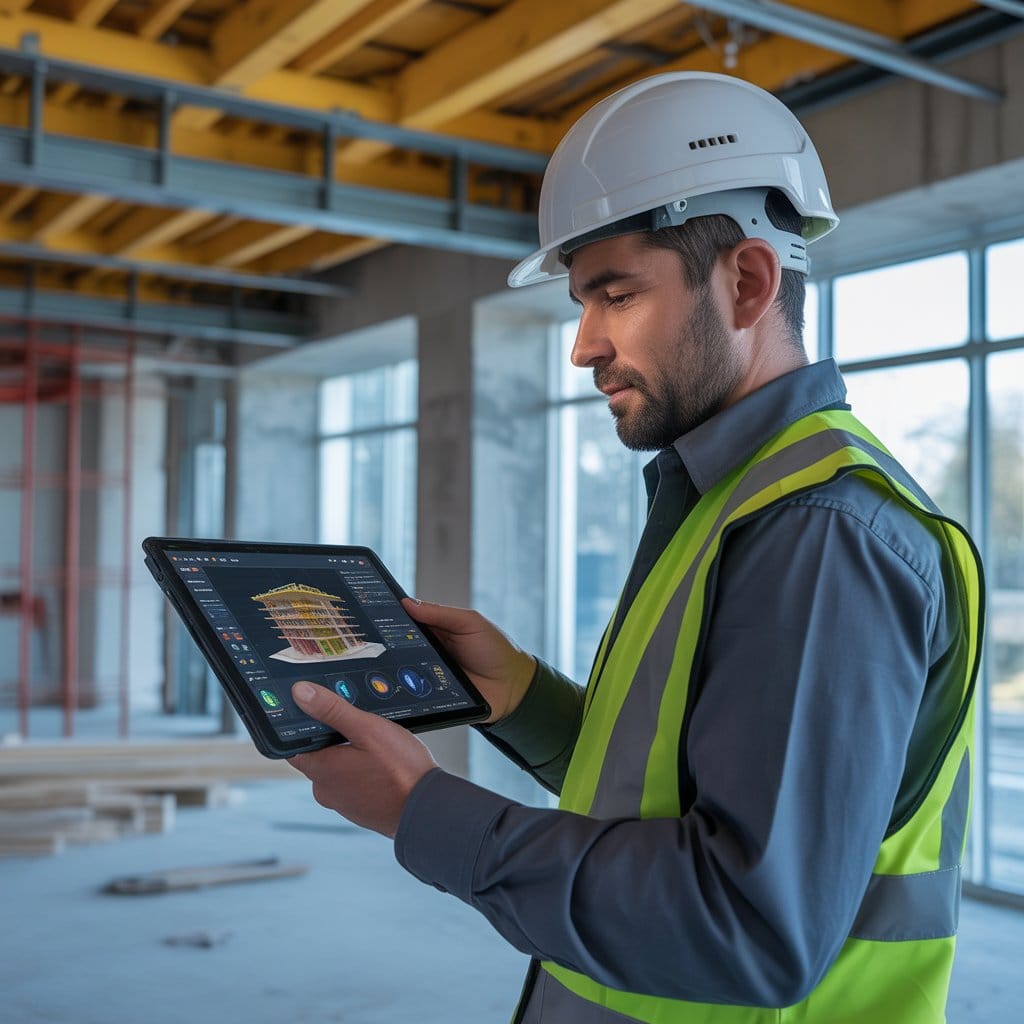
The construction industry is evolving faster than ever, and one technology is at the center of this transformation: BIM (Building Information Modeling).
What was once a tool reserved for architects and engineers is now becoming essential for carpenters, site supervisors, and skilled tradespeople on the ground.
Today’s construction sites demand precision, coordination, and digital fluency—and BIM gives carpenters the edge needed to thrive in a tech-driven industry.
What Is BIM and Why Does It Matter for Carpenters?
BIM is a digital representation of a building that includes 3D models, material details, workflows, timelines, and structural information.
But beyond being a 3D model, BIM acts as a central, smart database for everything related to a project.
For carpenters, this means:
- Exact material measurements
- Real-time updates
- Clash detection
- Better project coordination
- Improved accuracy in fabrication
No more guesswork. No more working with outdated drawings. BIM offers clarity from day one.
1. BIM Helps Carpenters Avoid Costly Mistakes
In traditional construction, carpenters often rely on multiple drawings that may not match or reflect last-minute changes.
With BIM:
- Dimensions are exact and consistent
- Changes update automatically
- Errors are caught earlier
- Rework is dramatically reduced
This means carpenters save time, reduce waste, and deliver higher-quality workmanship.
2. BIM Improves Coordination Across All Trades
Modern construction involves several teams working in parallel—electrical, plumbing, HVAC, carpentry, and more.
BIM shows how each trade interacts in real time.
For carpenters, this prevents:
- Wall conflicts
- Mismeasured partitions
- Unexpected pipe or duct placements
- Structural misalignment
Everyone works from one shared, accurate model.
3. BIM Elevates a Carpenter’s Career and Employability
Construction companies today prefer carpenters who understand digital tools.
BIM knowledge can help carpenters move into:
- Site coordination roles
- Technical supervisor positions
- Prefabrication and modular carpentry
- Digital construction teams
- Estimation and quantity surveying
It transforms a carpenter from a hands-on worker into a modern, tech-enabled professional.
4. BIM Supports Prefab and Modular Construction
Prefab and modular systems are growing rapidly in India and globally.
BIM is the backbone of these systems.
For carpenters, BIM helps with:
- Panelized wall construction
- Modular furniture
- Engineered wood systems
- CNC cutting plans
- Off-site assembly workflows
Knowing BIM can open new opportunities in advanced carpentry workshops and manufacturing units.
5. BIM Makes Carpenters Future-Ready
With AI, robotics, and digital twins entering construction, carpenters need to stay ahead.
BIM is the foundation of these innovations:
- Robots use BIM maps for navigation
- CNC machines read BIM-powered fabrication data
- AI tools use BIM information for prediction and planning
Carpenters who learn BIM today will lead the worksites of tomorrow.
6. How Carpenters Can Learn BIM
You don’t need an engineering degree to get started. Many carpenters begin with:
- Short-term BIM courses
- Online tutorials
- Apprenticeship programs
- On-site digital training
- Modular construction workshops
Tools like Autodesk Revit, Navisworks, and SketchUp are excellent entry points.
Conclusion: BIM Is No Longer Optional—It’s Essential
Carpentry has always been about craftsmanship, but today it also requires digital accuracy.
BIM helps carpenters:
- Work faster
- Improve precision
- Collaborate better
- Reduce waste
- Increase their earning potential
In a rapidly modernizing construction world, carpenters who know BIM will outpace those who don’t.
What a stunning article! This truly articulates the evolving relationship between timeless craftsmanship and digital innovation