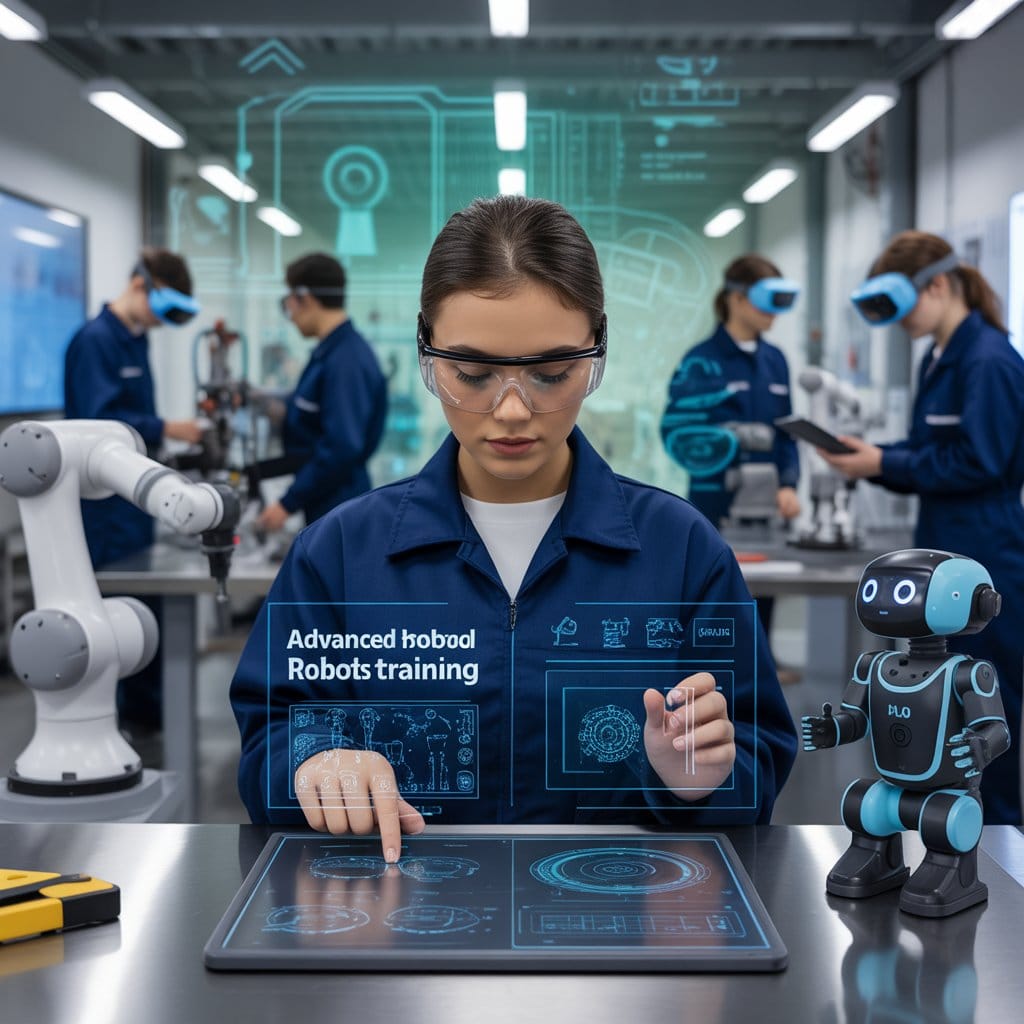
Artificial Intelligence (AI) and automation are transforming industries at a speed never seen before. From manufacturing to healthcare, routine tasks are being automated — raising both challenges and opportunities for the global workforce.
In this new landscape, vocational training is emerging as the backbone of workforce readiness. But the real question is: how must vocational training evolve to stay relevant in the age of intelligent machines?
The Challenge: Skills at Risk
As AI and robots take over repetitive jobs, millions of workers risk being displaced, especially in:
- Manufacturing & assembly lines
- Data entry and routine IT roles
- Basic finance and accounting
- Customer service call centres
Without reskilling, these workers may struggle to adapt. This is where vocational education becomes critical.
The Opportunity: New Jobs, New Skills
While some roles are disappearing, AI and automation are creating entirely new categories of jobs. Vocational training programmes must shift focus to:
- AI-augmented manufacturing (smart factory technicians, robotics maintenance experts)
- Digital and green skills (solar technicians, EV mechanics, AI-enabled logistics managers)
- Healthcare innovations (AI imaging specialists, medical tech assistants)
- Service sector transformation (AI-powered tourism, digital hospitality skills)
By aligning with emerging industries, vocational training can future-proof workers.
Skills of the Future
The age of AI requires a hybrid skill set:
- Technical Skills: Robotics operation, AI literacy, data management, programming basics.
- Human Skills: Creativity, critical thinking, empathy, and adaptability.
- Digital Skills: Cloud platforms, cyber security, digital collaboration tools.
Together, these create workers who can collaborate with machines — not compete against them.
Reimagining Vocational Training Systems
For vocational training to thrive in the AI era, governments, institutions, and industries must:
- Update curricula regularly to match evolving technologies.
- Integrate AI tools into classrooms and workshops for hands-on learning.
- Expand access through online and blended learning models.
- Build strong industry partnerships for apprenticeships and real-world exposure.
- Focus on lifelong learning, not just one-time training.
Final Thought
The future of work is not about humans versus machines — it’s about humans working with machines. Vocational training has the power to make this collaboration seamless, equipping workers with the skills needed to thrive in the AI-driven economy.
By embracing innovation and focusing on future-ready skills, vocational training can transform potential job losses into opportunities for growth, creativity, and resilience.
The future is not about being replaced by AI — it’s about being empowered by it.