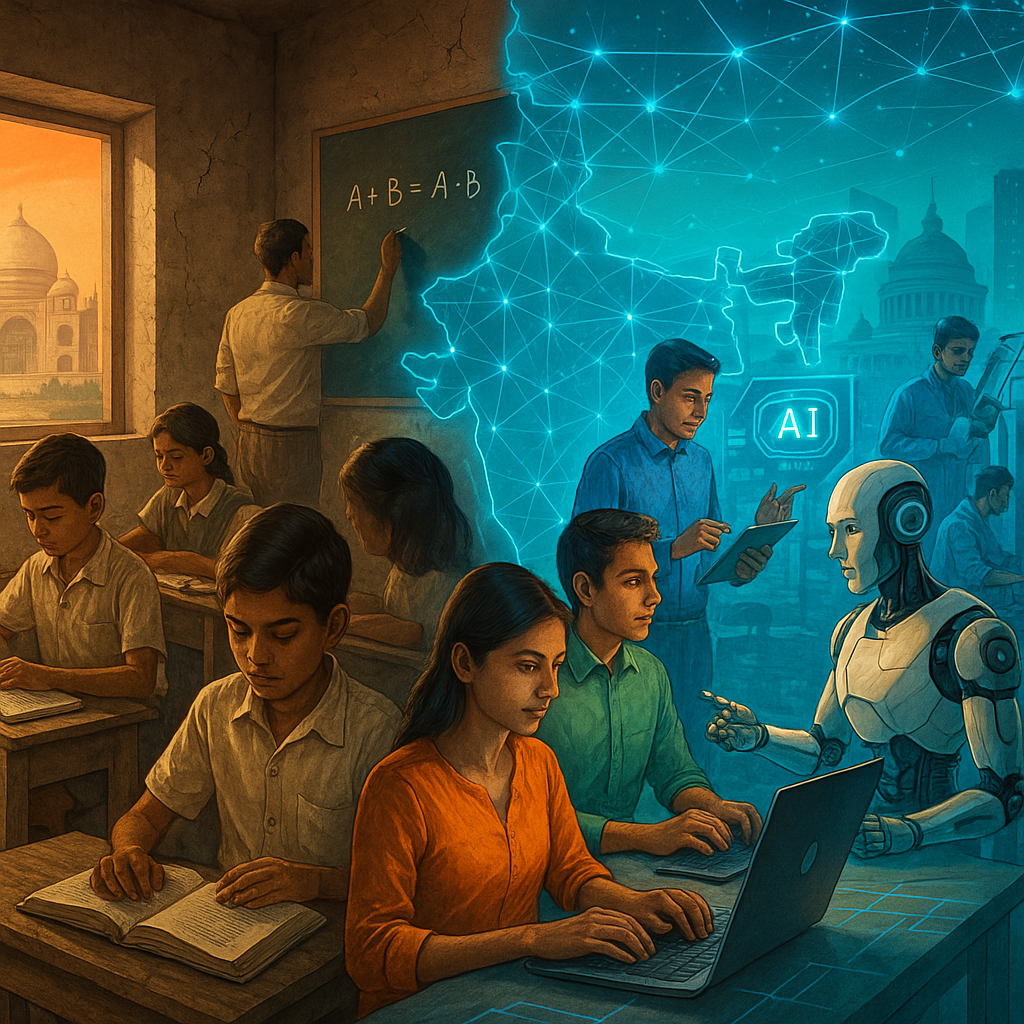
India’s demographic dividend is one of the largest in the world — but to turn this into an economic advantage, we need a workforce equipped for the demands of the 21st century. Unfortunately, deep-rooted structural challenges are holding back this potential.
Here’s a closer look at the key obstacles.
1. Skills Mismatch and Employability Crisis
The gap between education and employability is alarming:
- Only 46.8% of graduates are considered employable.
- 83% of engineering graduates lack industry-relevant skills.
- Just 5% of India’s workforce has received formal training.
This disconnect means that while millions enter the job market each year, employers struggle to find talent with the right skills — particularly in emerging fields like AI, advanced manufacturing, and green technologies.
2. Outdated Curriculum and Faculty Shortage
India’s higher education and vocational training systems are still heavily reliant on rote learning rather than practical, problem-solving approaches.
- Curricula are slow to adapt to evolving industry needs.
- Many Industrial Training Institutes (ITIs) and engineering colleges lack qualified faculty, especially in specialised technical domains.
Without updated content and skilled trainers, students graduate without the competencies needed for the jobs of tomorrow.
3. Digital Divide and Access Inequity
Digital skills are increasingly non-negotiable — yet access to the internet remains a major barrier.
- Only 31% of rural schools have internet access.
- Just 29% of rural households are connected online.
This divide means that large parts of the population, especially in rural areas, are left behind in the digital economy, limiting opportunities for online learning, remote work, and participation in the AI-driven future.
4. Weak R&D and Innovation Capacity
Innovation is the backbone of a competitive workforce — but India’s R&D ecosystem lags far behind global leaders.
- India spends only 0.7% of GDP on research and development.
- The country files 60 patents per million people, compared to China’s 1,200.
Without stronger investments in R&D, India risks being a consumer of global technologies rather than a creator.
5. Limited Academia-Industry Collaboration
Hands-on, industry-aligned training is essential for job readiness — but fewer than 10% of Indian Higher Education Institutions (HEIs) have active partnerships with industry.
The result?
- Students graduate without practical exposure.
- Companies spend more time and money on in-house training.
Closer collaboration can ensure curriculum relevance, real-world internships, and faster adaptation to technological change.
The Way Forward
Building a future-ready workforce in India will require:
- Curriculum overhaul aligned with industry demands.
- Massive investment in teacher training and faculty upskilling.
- Bridging the digital divide with infrastructure in rural areas.
- Boosting R&D spending to at least match global averages.
- Scaling industry-academia partnerships for hands-on training.
With the right reforms, India can transform its vast human capital into a global competitive advantage — ensuring not just jobs for its youth, but leadership in the future of work.