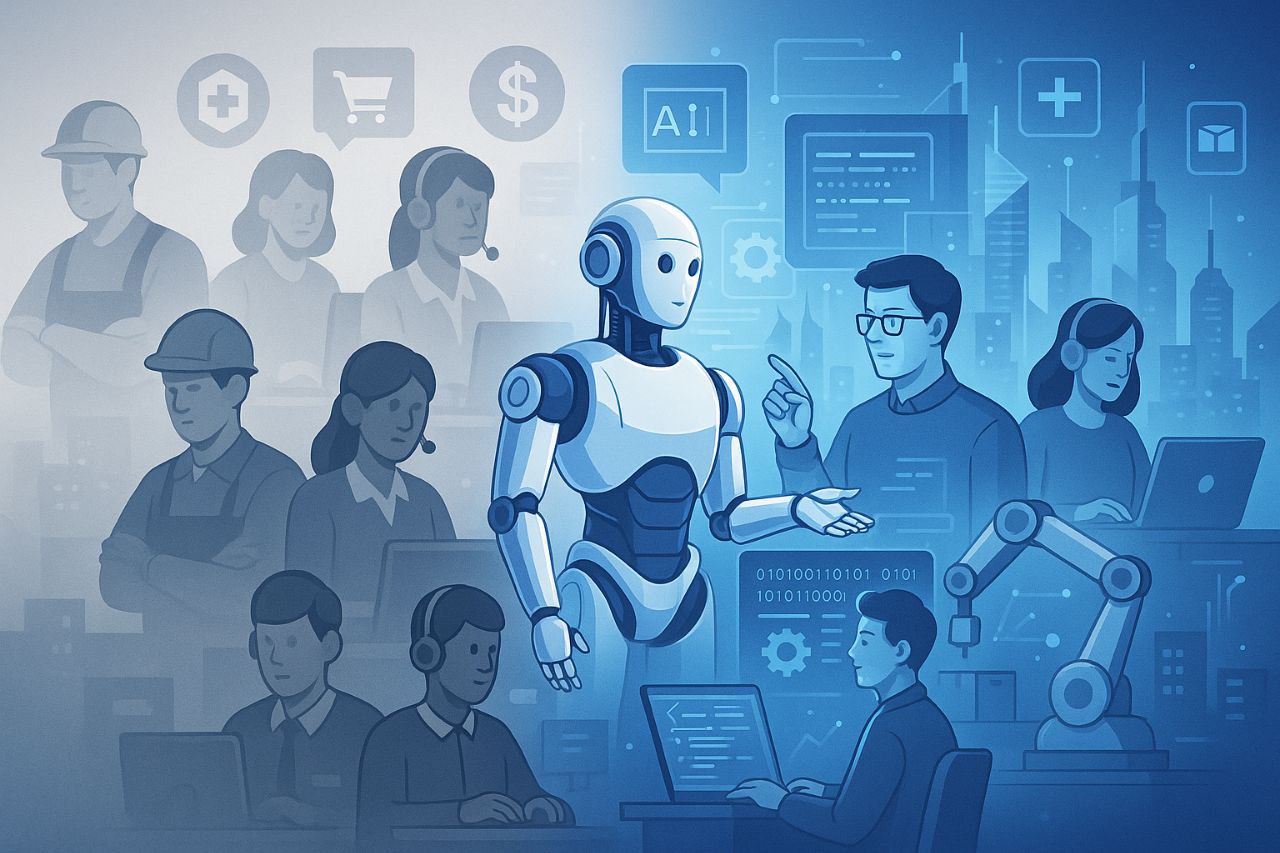
The whispers of automation and artificial intelligence (AI) replacing human jobs have grown into a roaring conversation. It's undeniable that the landscape of work is shifting dramatically, with robots and algorithms taking over tasks once performed by humans. But is this the end of work as we know it, or the dawn of a new era of opportunity? The truth, as always, is more nuanced.
The Shifting Sands: What AI and Automation Are Doing
AI and automation are primarily impacting jobs that involve repetitive, predictable, and data-driven tasks. Think manufacturing assembly lines, routine data entry, basic customer service interactions, and even certain analytical functions. These technologies offer unprecedented efficiency and accuracy, leading to increased productivity and, in some cases, a reduction in the demand for human labor in these specific areas.
However, the narrative isn't simply one of displacement. AI is also:
- Creating New Jobs: The rise of AI necessitates roles like AI ethicists, data scientists, machine learning engineers, AI trainers, and specialists in AI system maintenance and oversight. These are entirely new categories of employment that didn't exist a decade ago.
- Transforming Existing Roles: Rather than outright replacing jobs, AI often augments human capabilities. For example, a customer service representative might use AI-powered tools to quickly access information, allowing them to focus on more complex problem-solving and empathetic interactions. Similarly, doctors can leverage AI for diagnostics, freeing them to focus more on patient care.
- Boosting Productivity and Innovation: By automating mundane tasks, AI allows humans to focus on higher-order activities that require creativity, critical thinking, emotional intelligence, and complex problem-solving – areas where humans still hold a significant advantage. This can lead to overall economic growth and the emergence of entirely new industries.
The Crucial Role of Vocational Training
This evolving job market highlights a critical need: upskilling and reskilling. The "safety premium" once enjoyed by college graduates is narrowing, and the ability to adapt to new technologies is becoming paramount for everyone, regardless of their academic background. This is where the power of vocational training truly shines.
Traditional education models, while valuable, often struggle to keep pace with the rapid advancements in technology. Vocational training, on the other hand, is inherently agile and focused on practical, in-demand skills. It provides individuals with the specific expertise needed to work alongside AI and automation, rather than being replaced by it. This includes:
- Technical Skills: Learning to operate, maintain, and troubleshoot automated systems; understanding data analytics; and even basic coding for interacting with AI tools.
- Soft Skills: Communication, critical thinking, problem-solving, adaptability, and collaboration are becoming more valuable than ever. These are the uniquely human attributes that AI cannot replicate.
- Industry-Specific Knowledge: Vocational programs are designed to meet the immediate needs of various industries, ensuring that graduates are job-ready with skills directly applicable to the current technological landscape.
For individuals looking to thrive in this new era, investing in practical, hands-on training is no longer an option, but a necessity. Whether it's learning robotics for advanced manufacturing, acquiring data analytics skills for business insights, or mastering the art of prompt engineering for generative AI, vocational training bridges the gap between theoretical knowledge and real-world application. It empowers individuals to not just survive, but to truly excel in an AI-driven economy.
This is precisely the philosophy that drives institutions dedicated to empowering the next generation of professionals. They understand that the future of work isn't about competing with machines, but collaborating with them. By providing cutting-edge, industry-relevant programs, they equip individuals with the skills to navigate the complexities of AI and automation, fostering creativity, critical thinking, and lifelong learning. They are committed to transforming education through innovation and technology, offering diverse courses that nurture future innovators and prepare them for an ever-changing world. It's about ensuring that everyone, regardless of their background, has access to the transformative learning experiences needed to thrive.
The future isn't about humans versus machines; it's about humans with machines. The smart approach is to embrace continuous learning and leverage vocational training to become an indispensable part of this exciting, evolving workforce.