For decades, degrees dominated hiring decisions. However, that landscape is changing rapidly. Today, employers increasingly prioritize what candidates can do over what certificates they hold.
Skill-based hiring is no longer a trend. It is becoming the new standard.
As industries evolve through automation, digital transformation, and economic shifts, organizations seek job-ready professionals who can deliver immediate value. Consequently, vocational institutions must ask a critical question: Is your curriculum aligned with this new hiring reality?
What Is Skill-Based Hiring?
Skill-based hiring focuses on competencies rather than credentials. Instead of filtering applicants solely by degrees, employers assess technical ability, problem-solving capacity, adaptability, and real-world experience.
This shift has gained momentum as companies struggle with talent shortages. While many graduates possess academic qualifications, fewer demonstrate practical expertise. Therefore, businesses are redesigning recruitment strategies to prioritize demonstrable skills.
For vocational education providers, this shift represents both an opportunity and a responsibility.
Why Employers Are Changing Their Approach
Several forces are driving this transition.
First, technological advancement has shortened the lifecycle of many skills. As tools and systems evolve, outdated theoretical knowledge becomes less relevant. Employers now prefer candidates trained on current technologies.
Second, workforce agility has become essential. Companies operate in fast-changing environments where employees must adapt quickly. Skill-based hiring allows organizations to identify candidates who can perform tasks immediately without prolonged onboarding.
Finally, data shows that competency-based recruitment often improves diversity and performance outcomes. By focusing on skills rather than pedigree, employers widen their talent pool.
As a result, institutions that deliver practical, industry-aligned training gain greater relevance.
Is Your Vocational Curriculum Market-Ready?
To remain competitive, vocational programs must continuously evolve. A static curriculum risks producing graduates with outdated capabilities.
A market-ready vocational curriculum should include:
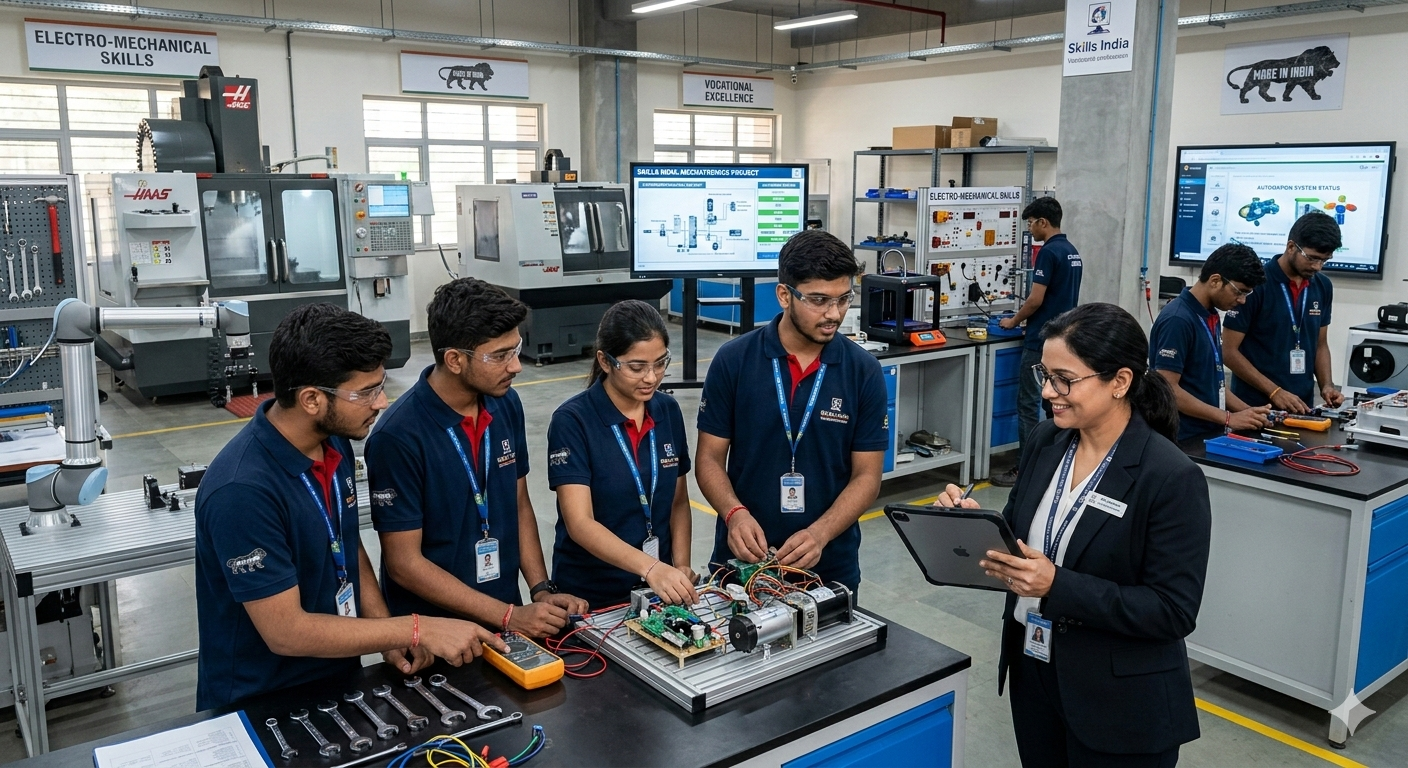
- Hands-on, project-based training
- Exposure to industry-standard tools and equipment
- Real-world simulations and problem-solving scenarios
- Soft skills such as communication and teamwork
- Opportunities for internships or apprenticeships
Moreover, collaboration with industry stakeholders ensures training remains aligned with workforce needs. When employers provide input on course content, graduates become more employable.
Without these updates, even well-established programs may fall behind.
The Importance of Measurable Competencies
In a skill-based hiring model, proof matters.
Employers increasingly request portfolios, practical assessments, and competency demonstrations. Therefore, vocational institutions must integrate measurable outcomes into their programs.
Certifications should reflect verified abilities rather than attendance. Assessments must simulate workplace challenges. Additionally, learners should graduate with tangible evidence of their capabilities.
By doing so, institutions strengthen employer trust and student confidence simultaneously.
Preparing Students for the Future of Work
Skill-based hiring does not eliminate the value of education. Instead, it redefines it. Learning must connect directly to application.
Vocational education is uniquely positioned to lead this transformation. Because it emphasizes applied learning, it naturally aligns with competency-driven recruitment models.
However, alignment requires proactive adaptation. Curriculum reviews, industry partnerships, technology integration, and continuous instructor development are essential steps.
Institutions that respond early will produce graduates who stand out in competitive labor markets.
Conclusion
Skill-based hiring is reshaping the employment landscape. Employers increasingly value practical expertise over traditional credentials alone. Consequently, vocational education must remain dynamic and industry-aligned.
The question is not whether skill-based hiring will grow. It already has.
The real question is whether your vocational curriculum is evolving fast enough to meet it.