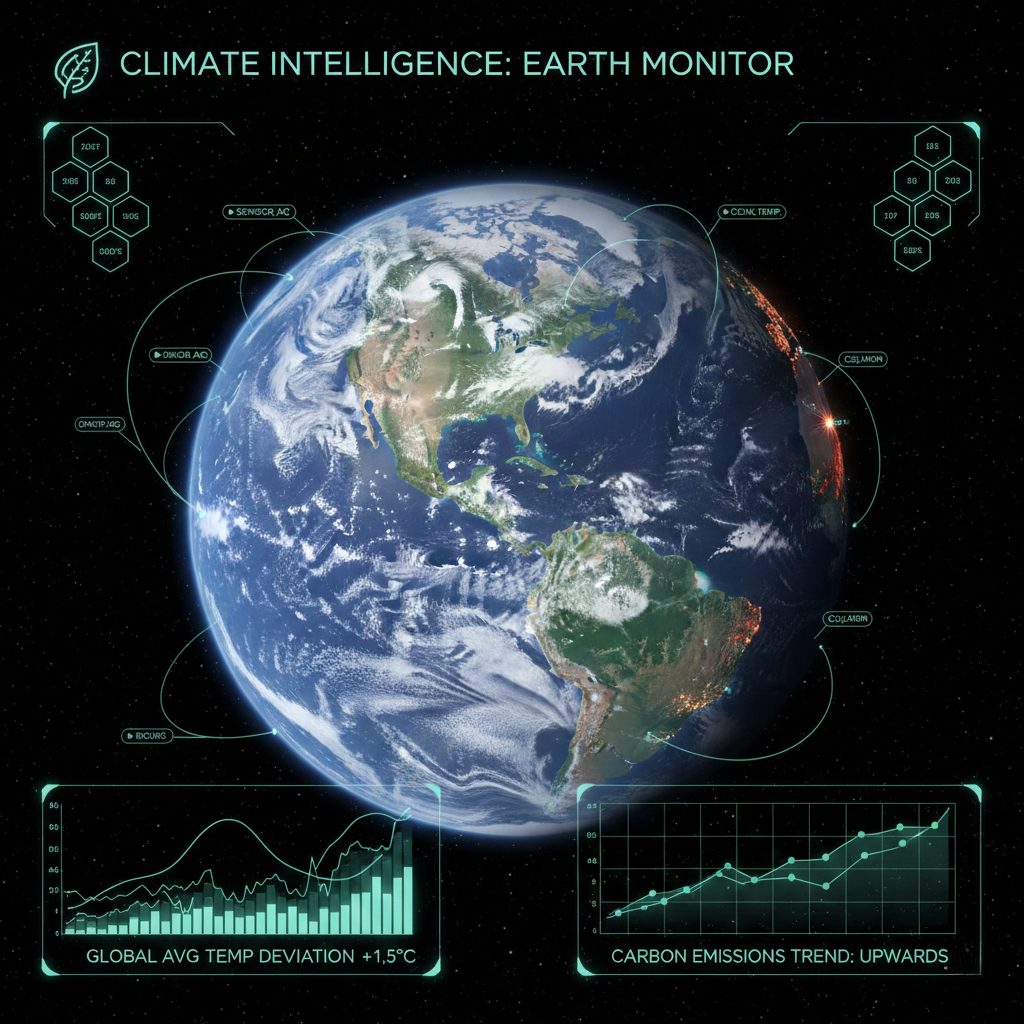
Climate change is no longer a distant threat. Rising temperatures, extreme weather events, and shrinking ecosystems are unfolding in real time. To respond effectively, scientists and policymakers need accurate, up-to-date data. This is where artificial intelligence is making a measurable difference. AI is transforming how we monitor, analyze, and respond to climate change by providing real-time insights at an unprecedented scale.
Why Real-Time Climate Monitoring Matters
Traditional climate research often relies on historical data and periodic field studies. While valuable, these methods can be slow and limited in scope. Climate change, however, is dynamic. Wildfires, floods, deforestation, and air pollution can escalate within hours.
Real-time monitoring allows governments, researchers, and environmental organizations to detect changes as they happen. With AI, massive volumes of environmental data can be processed instantly, enabling faster decisions and more effective climate responses.
How AI Collects Climate Data
AI systems rely on multiple data sources to track environmental changes accurately:
- Satellite imagery capturing land use, ice cover, and ocean temperatures
- Sensors measuring air quality, soil moisture, and water levels
- Drones monitoring forests, glaciers, and coastal regions
- Weather stations generating continuous climate data
Machine learning models analyze this information to identify patterns, detect anomalies, and predict future trends with increasing accuracy.
Tracking Climate Change in Real Time with AI
AI-powered climate models are already being used across the world to monitor environmental shifts:
Monitoring Deforestation and Biodiversity
AI analyzes satellite images to detect illegal logging, forest degradation, and habitat loss in near real time. This helps conservation groups intervene faster and protect endangered ecosystems.
Predicting Extreme Weather Events
Machine learning models improve weather forecasting by identifying complex climate patterns. AI-driven predictions help communities prepare for floods, heatwaves, cyclones, and droughts before they escalate.
Measuring Air and Water Pollution
AI systems process data from air quality sensors and water monitoring stations to track pollution levels. Real-time alerts enable authorities to act quickly and protect public health.
Observing Melting Ice and Rising Sea Levels
AI helps scientists monitor glacier retreat and sea-level rise by analyzing satellite and drone data. These insights are critical for coastal planning and climate adaptation strategies.
AI and Climate Decision-Making
Beyond monitoring, AI supports better climate decisions. Governments use AI-generated insights to design policies, allocate resources, and measure the effectiveness of environmental initiatives. Businesses rely on AI to assess climate risks in supply chains and reduce their environmental impact.
Educational and workforce development platforms are also beginning to integrate climate data literacy, helping professionals understand how AI-driven insights translate into real-world action.
Challenges and Ethical Considerations
While AI offers powerful tools for climate monitoring, challenges remain. Data accuracy, transparency, and accessibility are critical concerns. AI systems must be trained on reliable datasets and used responsibly to avoid biased or misleading conclusions.
Energy consumption is another factor. Large AI models require significant computing power, making energy-efficient AI development essential for sustainable climate solutions.
The Future of AI for the Planet
As climate challenges grow more complex, the role of AI will continue to expand. Future systems will offer more precise predictions, better integration across data sources, and improved accessibility for policymakers and communities alike.
By combining human expertise with machine intelligence, AI has the potential to become one of the most powerful tools in the global effort to understand and protect the planet.