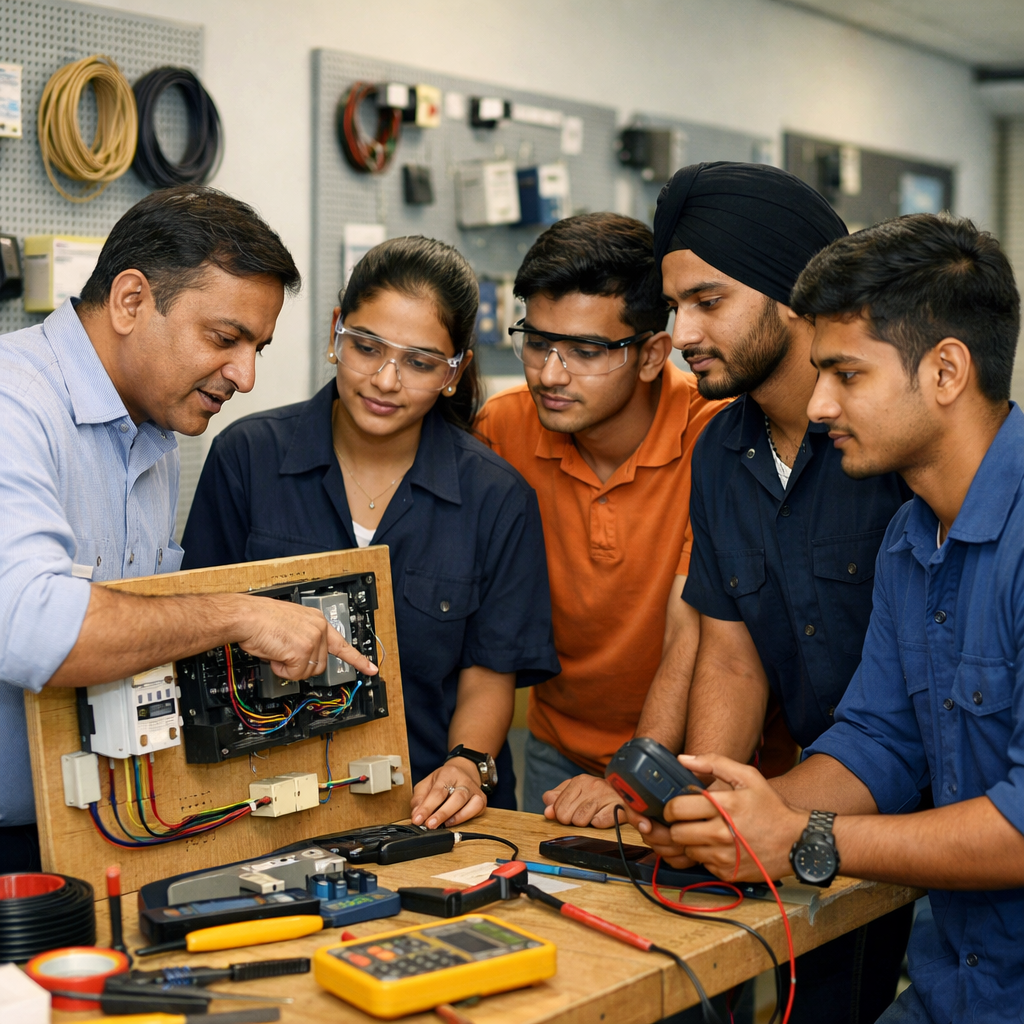
India stands at a pivotal moment in its economic journey. With a young population and rapidly evolving industries, the demand for job-ready skills has never been higher. While traditional degrees still hold value, vocational training is increasingly shaping India’s skilled workforce by focusing on practical abilities, industry relevance, and employability.
The Growing Skills Gap in India
Despite having one of the world’s largest labor forces, India faces a persistent skills mismatch. Many graduates struggle to find employment because their education does not align with industry needs. Employers across manufacturing, healthcare, construction, logistics, and technology consistently report a shortage of skilled workers who can perform job-specific tasks from day one.
Vocational training addresses this challenge by emphasizing hands-on learning, real-world applications, and industry-aligned curricula. Instead of focusing only on theory, learners develop practical competencies that match market demand.
Why Vocational Training Matters More Than Ever
As automation and digital tools transform workplaces, job roles are evolving faster than traditional education systems can adapt. Vocational training offers flexibility and speed, allowing learners to acquire relevant skills in a shorter time frame.
Key benefits include:
- Practical, job-oriented learning
- Faster entry into the workforce
- Strong alignment with industry requirements
- Opportunities for upskilling and reskilling
These advantages make vocational education a powerful tool for strengthening India’s workforce and supporting economic growth.
Supporting National Skill Development Goals
India’s focus on skill development has gained momentum through initiatives like Skill India and the National Skill Qualification Framework. Vocational training institutions play a critical role in translating these policies into measurable outcomes by preparing individuals for employment across both urban and rural sectors.
By offering structured training pathways and recognized certifications, vocational programs help workers move from informal roles into stable, skilled employment. This shift not only improves individual livelihoods but also enhances productivity across industries.
Industry-Aligned Training and Employability
One of the defining strengths of vocational training is its close connection with industry. Programs are often designed in collaboration with employers, ensuring that learners acquire relevant, in-demand skills.
Modern vocational platforms are also integrating digital tools, blended learning models, and assessment-driven training. Organizations like Meritude, for instance, focus on aligning learning with employment outcomes, helping learners transition smoothly from training to the workplace without unnecessary complexity.
Empowering Youth and Adult Learners Alike
Vocational training is not limited to first-time job seekers. It also benefits mid-career professionals, informal workers, and individuals seeking to upgrade their skills. For many, it offers a second chance at meaningful employment and career growth.
By making education more accessible and outcome-oriented, vocational training supports social mobility and helps create a more inclusive workforce.
The Future of India’s Skilled Workforce
As India continues its journey toward becoming a global economic leader, the importance of a skilled, adaptable workforce cannot be overstated. Vocational training will remain a cornerstone of this transformation, bridging the gap between education and employment.
By prioritizing practical skills, industry relevance, and continuous learning, vocational education is not just shaping careers. It is shaping the future of India’s workforce and its economy.