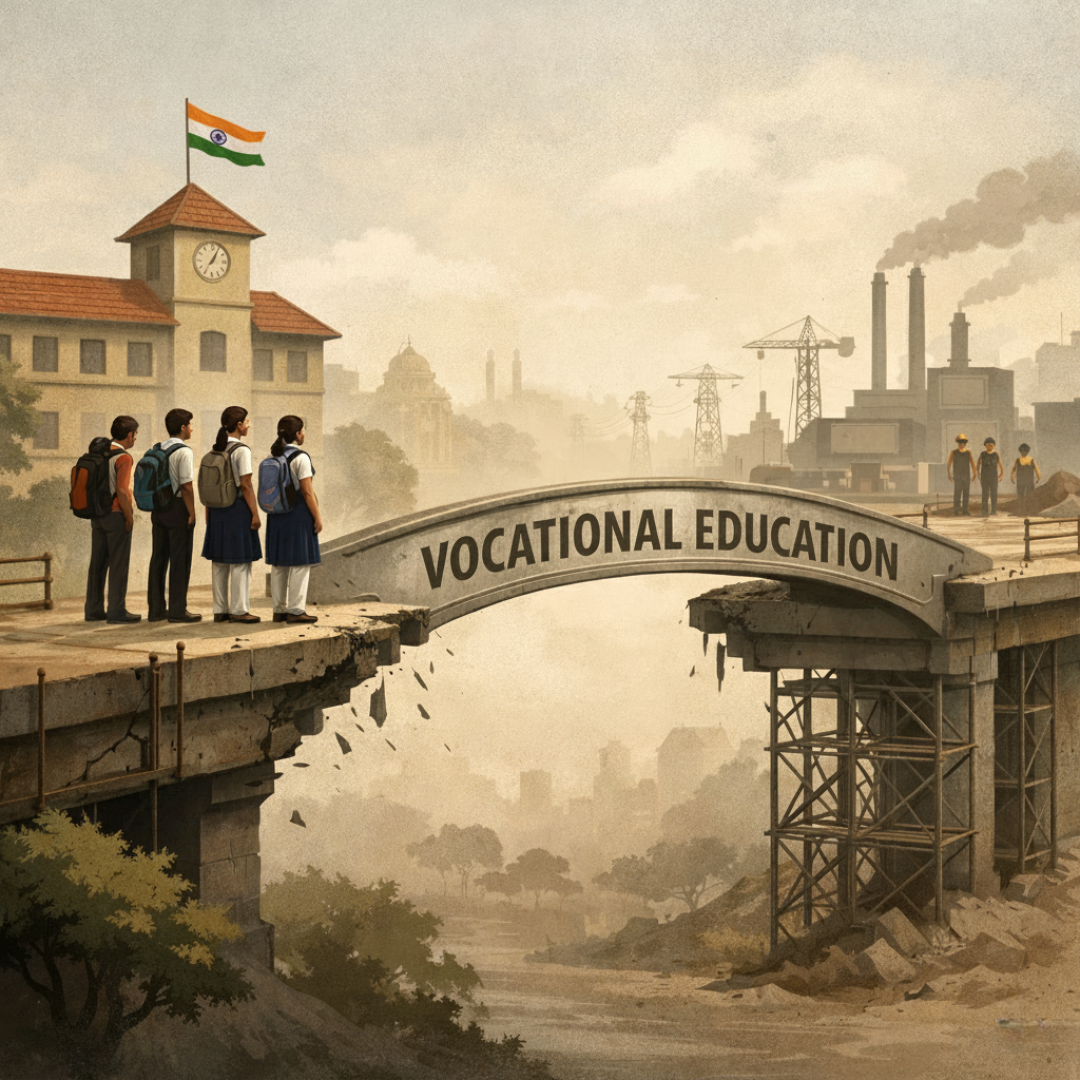
The National Education Policy 2020 was introduced with the promise of redefining India’s education system by giving vocational education the importance it has long lacked. By integrating skill based learning into mainstream schooling and higher education, NEP 2020 aimed to prepare students not just for degrees, but for real work and real livelihoods. However, years after its announcement, the gap between intent and implementation is becoming increasingly visible. Despite strong policy language and ambitious targets, vocational education under NEP 2020 has seen limited on ground progress, raising important questions about execution, readiness, and long term impact.
What NEP 2020 Envisioned for Vocational Education
NEP 2020 set ambitious goals for vocational learning:
- Early Exposure: Students from Grades 6 to 8 were to be exposed to vocation-related tasks such as plumbing, carpentry, electrical work, and more.
- Wide Reach: The policy aimed for at least 50 percent of learners in schools and higher education to have formal exposure to vocational education.
- Integration With Mainstream Curriculum: Vocational learning was supposed to be combined with academic subjects rather than remain separate.
- Institutional Partnerships: Schools and universities were expected to collaborate with polytechnics, industrial training institutes (ITIs) and NGOs to offer practical knowledge and internships.
These elements designed a framework where students would learn a vocation and also explore several others, equipping them with both skills and choice.
Where Things Stand: Progress vs Reality
Despite clear policy goals, the actual state of vocational education in India shows limited advancement:
1. Ground Implementation Is Slow
The Free Press Journal notes that actual integration of vocational skills into mainstream education is barely visible outside a few isolated efforts. Most schools still focus on academic subjects, with vocational training often sidelined or theoretical.
2. Cultural Bias Against Vocational Careers
In India, vocational education has traditionally been seen as less prestigious than academic streams. Parents and students often prefer traditional white-collar pathways, which discourages uptake. This cultural bias is one of the main barriers to realizing NEP’s goals.
3. Lack of Meaningful Exposure
Even where vocational modules exist, they frequently lack proper infrastructure, hands-on training, and industry partnerships. This reduces their effectiveness and employer relevance.
4. Limited Awareness and Acceptance
Many educators and students are unaware of the expanded scope of vocational careers that NEP 2020 envisages such as web design, 3D printing, and emerging tech roles that go beyond traditional manual trades.
Why Progress Is Limited
Implementation gaps in vocational education can be traced to several structural challenges:
- Insufficient Infrastructure: Most schools lack vocational labs, tools, and qualified trainers.
- Teacher Training Shortfalls: Teachers are often unprepared to deliver vocational curriculum effectively.
- Industry Linkage Weakness: Strong partnerships between education institutions and industries remain rare, limiting internships and real-world skill exposure.
- Low Social Prestige: Ongoing perception that vocational careers are “lower status” constrains student enrollment.
Although other sources show some integration under schemes like Samagra Shiksha, with thousands of schools offering vocational subjects and roles across sectors like IT and agriculture, it still doesn’t reflect widespread transformation in learning culture (e.g., hub-and-spoke models reaching many students).
Why Vocational Education Matters Now
Global evidence suggests vocational training plays a critical role in addressing skill gaps and boosting employment prospects. Practical, job-related learning equips learners with competencies that directly match industry needs, lowering youth unemployment and strengthening economic growth.
Vocational pathways also support diversification of careers for students who may not pursue traditional academic degrees, especially in rapidly changing job markets.
Steps That Can Improve Implementation
To make NEP 2020’s vocational vision a reality, several actions are critical:
- Scale up Infrastructure: Develop vocational labs and facilities in schools with quality equipment and materials.
- Teacher Development: Invest in training teachers specifically for vocational subjects.
- Industry Alliances: Institutionalize partnerships with local employers to offer internships, real projects, and apprenticeships.
- Awareness Drives: Promote vocational careers in communities to reduce stigma and attract learners.
Conclusion
NEP 2020 set a visionary path for transforming vocational education in India. Its success depends less on policy wording and more on effective implementation at the school and college level. While early moves have taken place, radical expansion and cultural change are still pending. Unless vocational education earns serious attention from policymakers, educators, and families alike, India risks missing a significant opportunity to prepare its youth for the future job market.