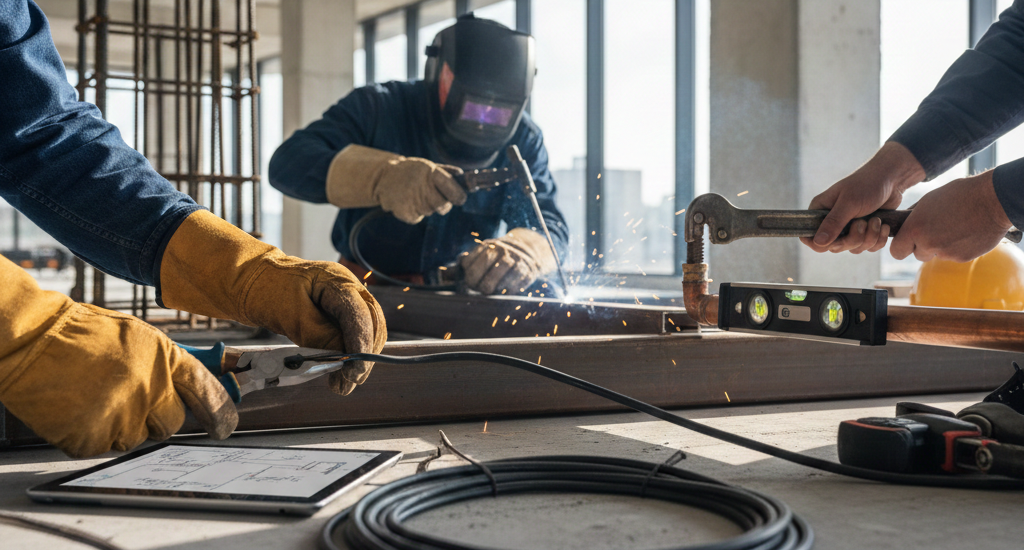
As artificial intelligence continues to automate routine tasks and digital workflows, one truth is becoming increasingly clear: AI vs. the trades is not a fair fight, because skilled hands still outperform machines in the real world. While software can process data at lightning speed, it cannot replace the adaptability, judgment, and physical expertise required in vocational professions. In an era of rapid automation, hands-on skills are emerging as the most reliable form of job security.
Why AI Struggles with Skilled Trades
AI excels in predictable, rule-based environments. Skilled trades operate in exactly the opposite conditions.
Electricians, plumbers, welders, carpenters, and technicians work in dynamic settings where no two jobs are the same. Every site has unique constraints, human factors, and real-time problem-solving requirements. AI systems lack the situational awareness, tactile feedback, and improvisational thinking needed to handle these challenges effectively.
Key limitations of AI in trades include:
- Inability to adapt to unpredictable physical environments
- Lack of sensory judgment and fine motor control
- Dependence on clean data and controlled conditions
- No accountability or ethical decision-making on-site
This is why AI remains a tool, not a replacement, in vocational occupations.
Hands-On Skills as Future-Proof Career Assets
The global workforce is witnessing a paradox. While digital jobs face increasing automation risk, trade-based careers are experiencing sustained demand and wage growth.
Vocational skills provide:
- High employability across industries
- Lower automation risk compared to white-collar roles
- Opportunities for entrepreneurship and self-employment
- Direct contribution to essential infrastructure and services
From maintaining power grids to constructing smart buildings, skilled trades form the backbone of modern economies. Your hands, combined with experience and training, become assets that technology enhances rather than replaces.
How AI Is Supporting, Not Replacing, Tradespeople
Instead of eliminating trade jobs, AI is reshaping how work gets done. Tradespeople who embrace technology gain a competitive edge.
Examples include:
- AI-powered diagnostics for electrical systems
- Predictive maintenance tools for machinery
- Digital blueprints and augmented training modules
- Smart tools that improve accuracy and safety
In this model, human skill remains central, while AI acts as an assistant that improves efficiency and precision.
Vocational Training Is the Smart Career Strategy
As industries evolve, vocational education and training programs are adapting to include digital literacy, safety automation, and smart tool usage. This blend of traditional craftsmanship and modern technology creates a resilient workforce prepared for the future of work.
Choosing a trade today means choosing:
- Stability in an uncertain job market
- Skills that remain valuable across decades
- A career built on human capability, not algorithms
Conclusion
In the debate of AI vs. the trades, the winner is not technology alone, but the skilled human who knows how to use it. While machines can calculate, predict, and automate, they cannot think with their hands. As automation accelerates, your hands are your strongest form of job security.
Investing in vocational skills is not a fallback option. It is a forward-thinking career move in a world where human expertise still matters most.