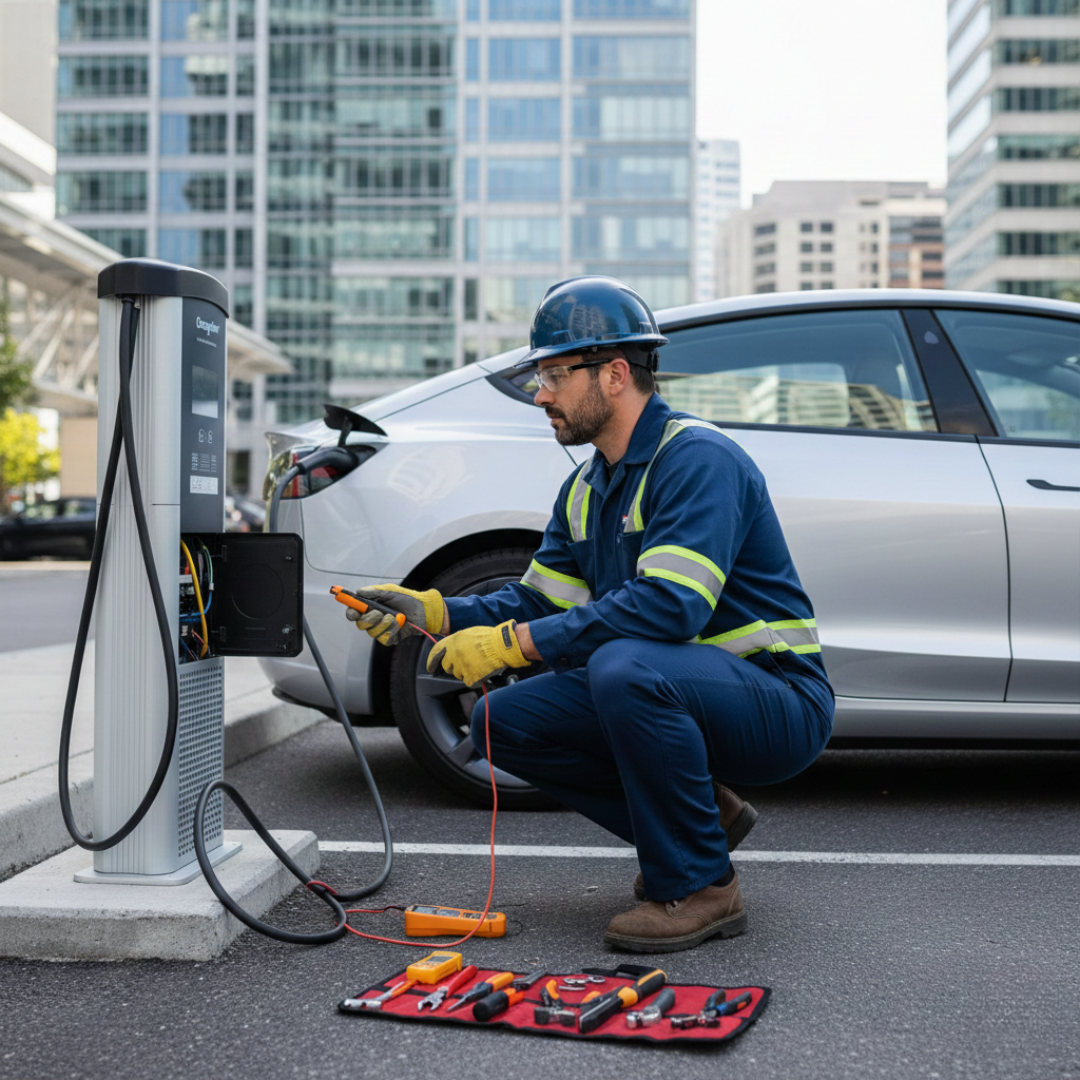
The global shift toward electric mobility is accelerating faster than expected. Governments, manufacturers, and energy providers are investing heavily in electric vehicle charging networks, battery systems, and smart grids. At the center of this transformation is the EV infrastructure boom, creating an urgent need for skilled high-voltage electricians who can safely build, install, and maintain these systems.
Vocational training is emerging as the key enabler in preparing the next generation of electricians for this high-growth, high-responsibility field.
Understanding the EV Infrastructure Boom
Electric vehicles are no longer niche. Public charging stations, fast-charging hubs, fleet depots, and residential EV setups are expanding rapidly across cities and highways.
This infrastructure relies on:
- High-voltage electrical systems
- Advanced safety protocols
- Smart energy management
- Integration with renewable power sources
As a result, traditional electrical skills alone are no longer sufficient.
Why High-Voltage Electricians Are in High Demand
Complex Electrical Systems
EV chargers operate at significantly higher voltages than standard electrical installations. Electricians must understand load management, power conversion, grounding, and thermal safety.
Safety-Critical Roles
Working with high-voltage systems carries serious risk. Proper training is essential to prevent equipment damage, outages, and life-threatening accidents.
Regulatory and Compliance Requirements
EV infrastructure must comply with evolving electrical codes, grid standards, and environmental regulations. Skilled electricians ensure installations meet these requirements.
How Vocational Training Is Powering the EV Workforce
Specialized EV-Focused Curricula
Modern vocational programs now include modules on EV charging technology, battery systems, smart grids, and energy storage.
Hands-On, Practical Learning
Training emphasizes real-world practice using charging equipment, diagnostic tools, and safety gear, ensuring job readiness from day one.
Fast-Track Skill Development
Vocational pathways allow learners to enter the EV workforce faster than traditional engineering routes, meeting urgent industry demand.
Career Opportunities in EV Infrastructure
High-voltage electricians trained for EV systems can pursue roles such as:
- EV charging station installers
- Grid integration technicians
- Fleet charging specialists
- Maintenance and inspection professionals
- Renewable energy integration technicians
These roles offer strong job security, competitive wages, and long-term career growth as EV adoption increases.
Industry and Economic Impact
A skilled EV workforce supports:
- Faster EV adoption
- Reduced carbon emissions
- Stronger energy resilience
- Growth of green-collar employment
By investing in vocational training, industries ensure that infrastructure expansion keeps pace with demand.
The Road Ahead
As electric mobility becomes mainstream, the need for high-voltage electricians will only intensify. Training institutions, employers, and policymakers must work together to expand access to quality vocational education aligned with EV technologies.
Preparing electricians for the EV era is not just a workforce strategy. It is a foundation for a cleaner, smarter, and more sustainable future.