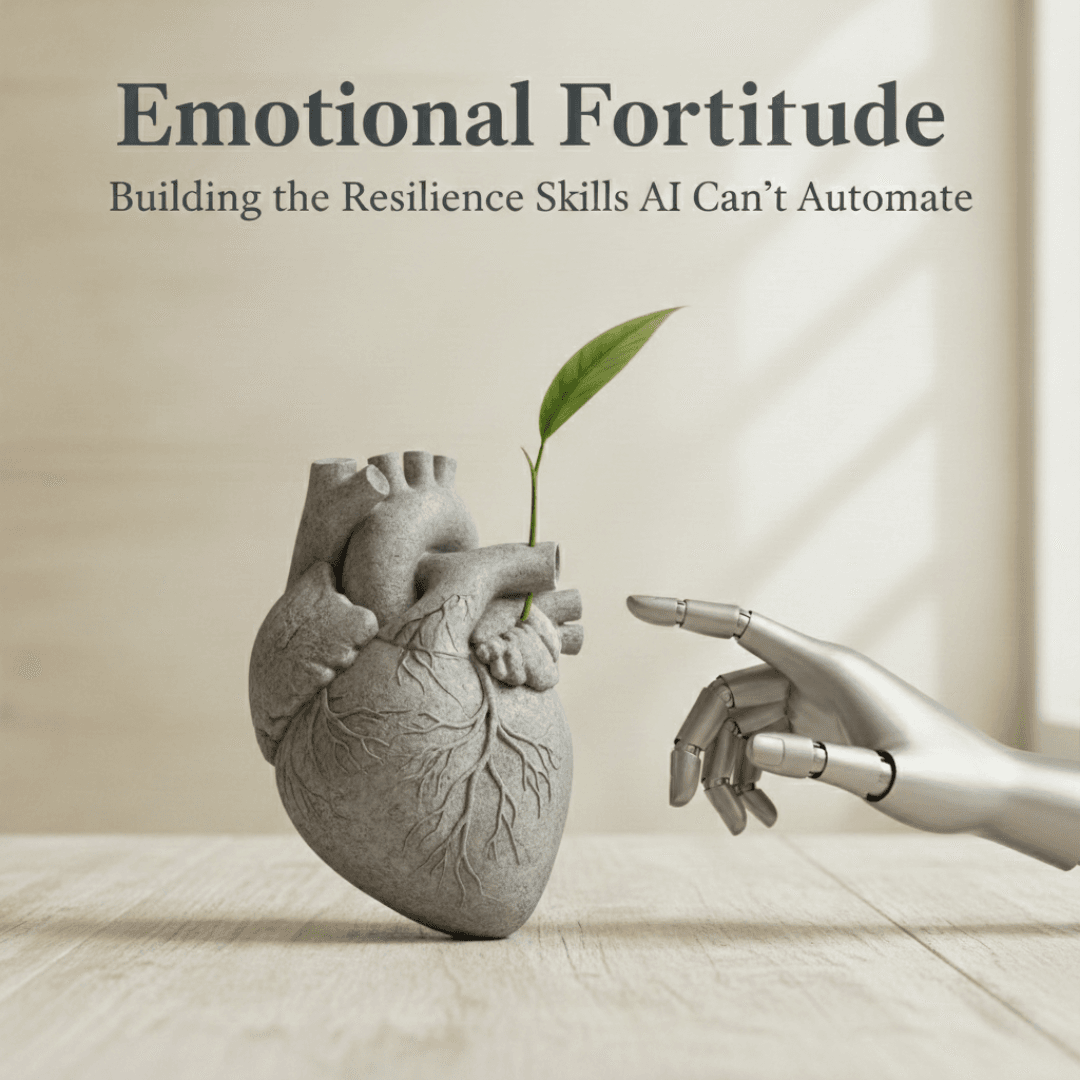
In a world increasingly shaped by automation and AI, one truth has only grown more obvious: the future belongs not just to the most technically skilled, but to the most emotionally resilient. While AI can forecast demand, process data, and optimize workflows, it cannot replicate the deeply human capacity for emotional fortitude—the ability to stay steady, adapt, and lead under pressure.
Emotional fortitude is more than staying calm. It’s about navigating uncertainty, recovering from setbacks, and making grounded decisions, especially when stakes are high. And right now, it’s emerging as one of the most valuable skills in the modern workplace.
Why Emotional Resilience Matters More Than Ever
1. AI Handles Data — Humans Handle Disruptions
AI can identify patterns, but it can’t interpret the human meaning behind them. When teams face unexpected challenges—budget cuts, changing markets, client conflicts—it’s emotional resilience that keeps people moving forward productively.
2. Resilience Drives Better Leadership
Great leaders are rarely the smartest in the room—they are the calmest. Emotional fortitude allows leaders to stay grounded, manage conflict, and make clear decisions when everyone else feels overwhelmed. Machines may assist leaders, but they can’t replace their emotional steadiness.
3. Creativity Thrives When People Feel Strong
Innovation requires risk. Risk requires courage. Courage requires emotional resilience.
AI can suggest ideas, but breakthrough innovation happens when humans push through self-doubt, uncertainty, and fear—something no algorithm can do.
4. Employees With High Resilience Adapt Faster
Companies globally are undergoing rapid digital transformation. The employees who thrive are not those who know every tool, but those who adapt, learn quickly, and stay composed during constant change.
The Resilience Skills AI Will Never Automate
Emotional Self-Regulation
The ability to recognize and manage your emotions in real time—especially during conflict or stress—is uniquely human. AI can monitor mood, but it can’t practice discipline.
Empathy and Human Connection
Machines can simulate empathy through pattern recognition, but they can’t create genuine human connection. Understanding perspectives, reading subtle cues, and supporting teammates are deeply human instincts.
Moral Judgment & Integrity
Ethical decisions require value-based thinking, compassion, and long-term foresight. AI has no moral compass—humans do.
Perseverance & Grit
AI doesn’t “struggle.” Humans do—and it’s our ability to push through difficulty that builds strength, capability, and mastery.
How to Strengthen Your Emotional Fortitude
1. Practice Cognitive Flexibility
Challenge your assumptions. Learn to see problems from different angles. Resilient people can pivot without losing momentum.
2. Develop Stress-Management Habits
Exercise, structured rest, mindfulness, or journaling—whatever helps you reset mentally. Emotional resilience is a daily practice, not a personality trait.
3. Build Supportive Relationships
Resilience grows in environments where people feel supported and trusted. Strong networks make tough moments easier to navigate.
4. Reframe Setbacks as Data
Instead of thinking “I failed,” think “I learned something.” This shift dramatically strengthens emotional recovery.
5. Strengthen Purpose & Values
People with clear values and purpose withstand pressure better. They know what they stand for—and what they won’t compromise on.
The Future of Work Belongs to the Emotionally Strong
AI will continue to evolve, but emotional fortitude will remain a non-automatable competitive advantage. Companies increasingly value workers who stay composed, empathetic, and adaptable. These are the traits that shape meaningful careers, strong teams, and resilient organizations.
In the age of AI, emotional strength is no longer a “soft skill”—it’s a core human power.