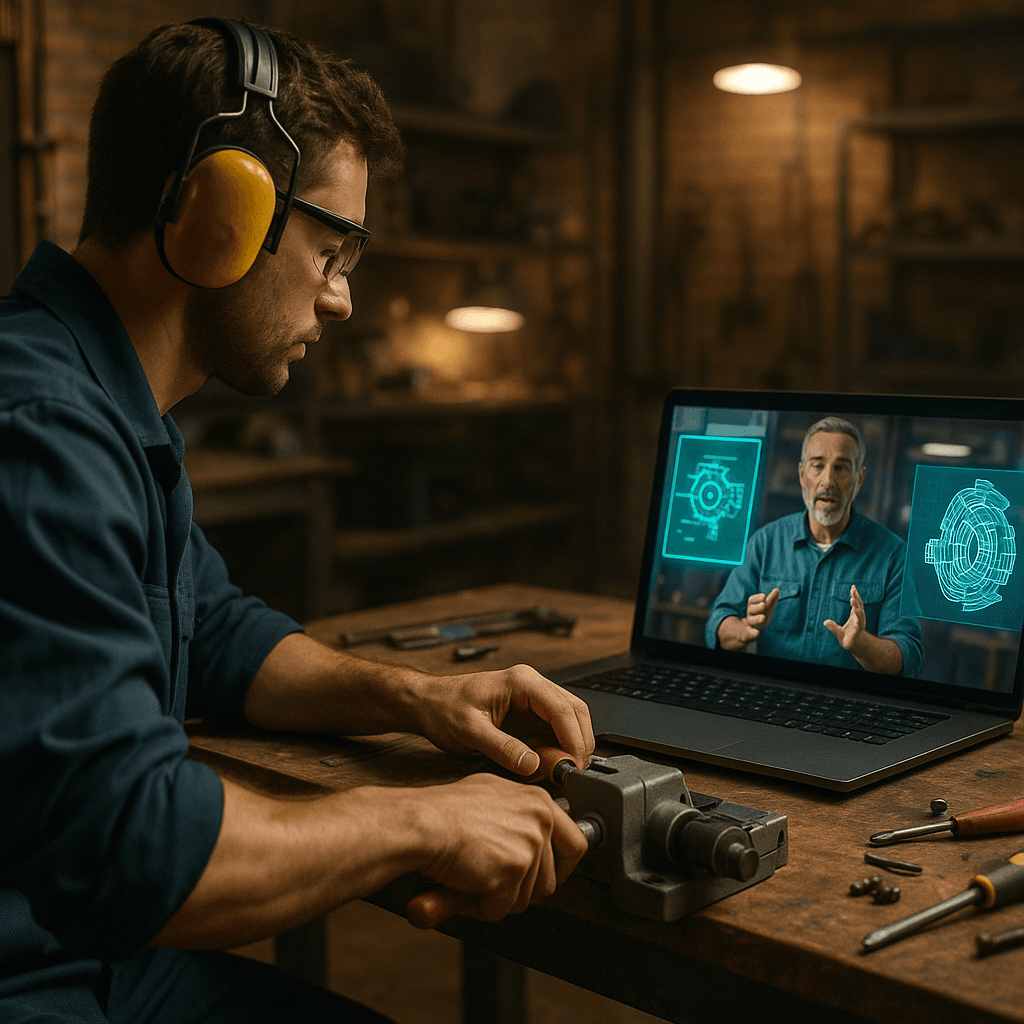
Hands-on skills and online learning were once worlds apart. But today, thanks to digital innovation and new teaching models, hybrid vocational training is redefining what a modern “shop class” looks like.
From automotive repair to healthcare support and digital fabrication, learners can now master technical skills using a powerful combination of virtual lessons + real-world practice—a model that’s transforming skill development worldwide.
Why Hybrid Vocational Training Is Becoming the New Norm
Traditional vocational training required students to be physically present for every class. But with digital platforms becoming smarter and more accessible, industries are rethinking how skills can be taught.
Hybrid vocational training offers:
- Online theory learning through videos, simulations, and interactive modules
- Offline hands-on workshops for real practice
- AI-powered assessments that guide learners
- Trainer-led practical sessions to refine techniques
This blend ensures flexibility without compromising skill quality.
How Online Shop Class Actually Works
The concept might sound surprising—how can someone learn welding, automotive diagnostics, or electrical installation online?
Here’s how hybrid vocational programs make it possible:
1. Virtual Demonstrations and AI Simulations
Learners watch high-quality demos and practice through simulations that mimic real equipment.
2. Self-Paced Online Modules
Theory, safety protocols, and foundational concepts are learned digitally—making classes more efficient.
3. Scheduled Hands-On Lab Sessions
Learners visit training centers for guided practical work, ensuring they still develop physical skill mastery.
4. Digital Assessments and Feedback
AI tracks performance, highlights mistakes, and provides personalized improvement suggestions.
This model makes training future-ready — blending technology with tactile learning.
Industries Leading the Hybrid Vocational Training Revolution
Many sectors are adopting this model to train learners faster and more affordably:
- Healthcare – Phlebotomy, medical assistance, lab support
- Automotive – Electric vehicle diagnostics, engine repair basics
- Construction & Trades – Plumbing, electrical systems, carpentry
- Manufacturing – Robotics handling, CNC operations
- Digital fields – UX design, 3D modeling, digital fabrication
Hybrid models ensure learners get the flexibility of online education and the precision of in-person training.
The Benefits: Learning Anytime, Practicing Meaningfully
Hybrid vocational training offers powerful advantages:
✅ Flexible schedules for students, parents, and working adults
✅ Faster learning with online modules covering theory efficiently
✅ Lower training costs without compromising depth
✅ Access to advanced simulations for high-risk skills
✅ More confident learners thanks to dual exposure
It’s a perfect blend for today’s fast-paced world.
How India Is Embracing Hybrid Shop-Class Learning
Skill development organizations and institutions are increasingly offering hybrid courses to reach more learners—especially in rural and semi-urban regions.
Innovators like Meritude are exploring how blended learning can strengthen vocational pathways, making skill education more inclusive and modern.
The Road Ahead: What Hybrid Learning Means for the Future
Hybrid vocational training is not a temporary shift—it’s the direction skill development is heading.
Expect to see:
- More VR and AI-driven simulations
- Smart classrooms for remote practical monitoring
- Digital badges and micro-credentials
- Industry-linked hybrid apprenticeships
The shop class of tomorrow will be both online and hands-on—a true blend of flexibility, access, and practical mastery.