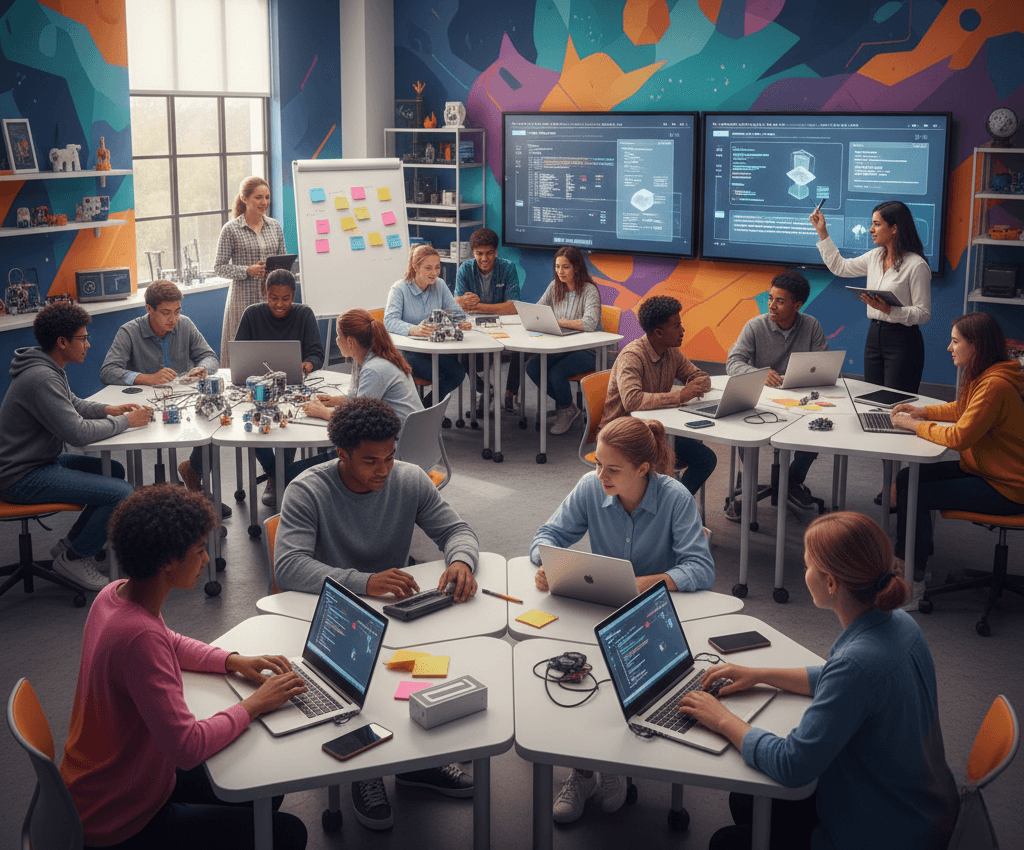
In today’s rapidly evolving world, skill development in education is no longer optional — it’s essential. As technology reshapes industries and job roles, traditional learning models focused solely on academics are no longer enough. Integrating practical skills into school and college curricula ensures that students are not only knowledgeable but also employable and adaptable.
Why Skill Development Matters in Modern Education
The purpose of education has shifted from memorizing facts to mastering skills that drive innovation, collaboration, and problem-solving. Skill development programs help bridge the gap between classroom learning and workplace demands — creating confident individuals ready to face the future.
From communication and digital literacy to leadership and emotional intelligence, these skills enhance students’ personal and professional growth. Countries that prioritize skill-based learning are producing future-ready graduates who can thrive in any industry.
How Schools and Colleges Can Integrate Skill Development
To make skill development in education a success, institutions can:
- Introduce vocational training modules alongside academic subjects.
- Collaborate with industry experts to provide students real-world exposure.
- Encourage project-based learning, where students apply concepts practically.
- Adopt technology-driven learning, like AI, coding, and digital design tools.
- Host internships and workshops to foster hands-on experience early.
When schools and colleges emphasize these methods, they help students move beyond rote learning and embrace practical knowledge that aligns with global skill demands.
The Role of Teachers and Institutions in Promoting Skill Development
Educators play a critical role in shaping the skill-based learning experience. Teachers must be trained to integrate skill-building activities within regular subjects — for example, including communication exercises in English lessons or digital tools in science projects.
Institutions can also collaborate with vocational training organizations such as Meritude, which focus on developing employment-ready skills through structured, practical, and engaging programs.
Skill Development: The Road Ahead for Indian Education
India’s National Education Policy (NEP) emphasizes the integration of skill development into all levels of education — a visionary step toward aligning learning with employability. By embedding skill-based modules early, schools and colleges can nurture curiosity, creativity, and competence.
The future belongs to students who not only know what to think but how to think — and that’s where skill development becomes the cornerstone of education.
Conclusion: Building a Generation of Future-Ready Learners
Integrating skill development in education creates well-rounded individuals ready for both life and work. Schools and colleges that embrace this transformation aren’t just teaching subjects — they’re shaping futures.
As India moves toward becoming a global skill hub, now is the time to make skill-based learning a permanent part of every student’s educational journey.