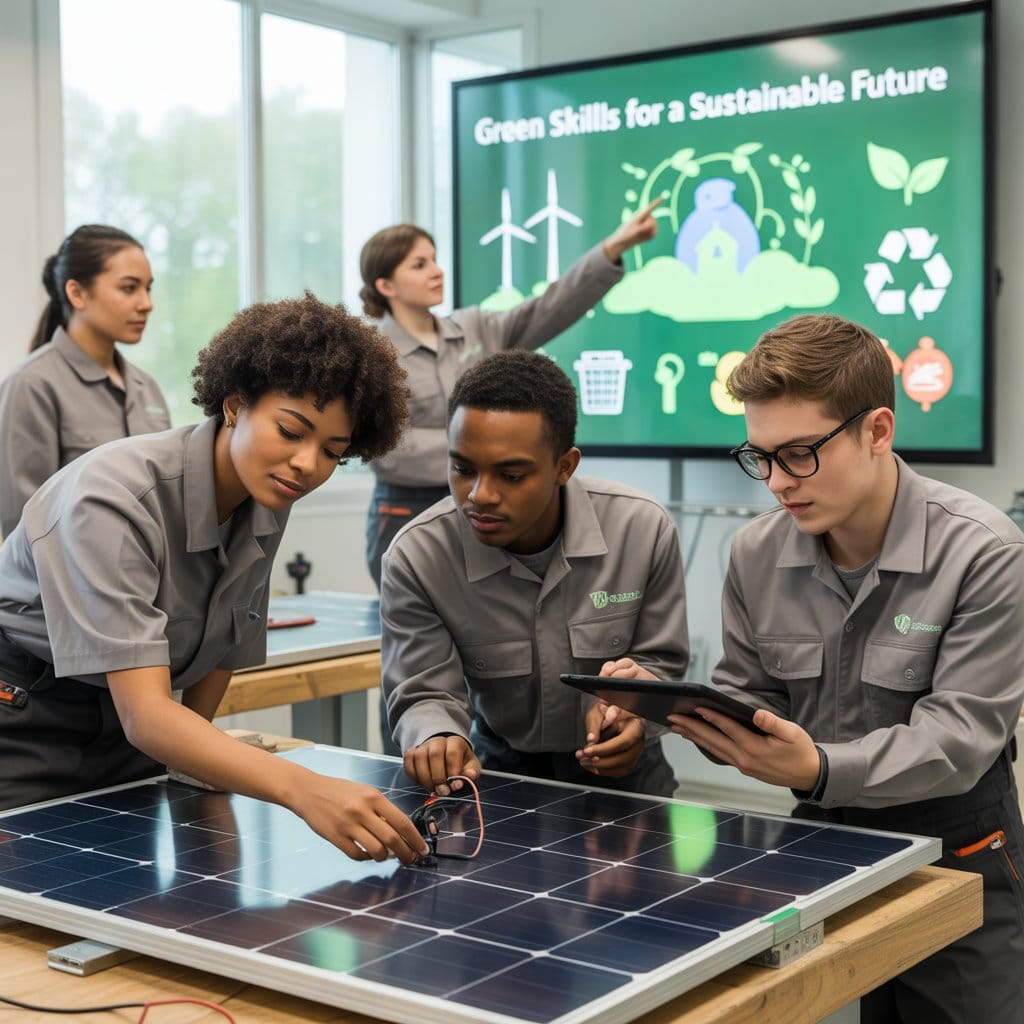
As climate change accelerates and industries shift towards eco-friendly practices, the demand for green skills is skyrocketing. From renewable energy to sustainable agriculture, the global economy is moving towards a future where sustainability is not optional — it’s essential.
To meet this demand, green skills training is becoming a cornerstone of workforce development.
What Are Green Skills?
Green skills are the knowledge, abilities, and values needed to build and support a sustainable society. They help workers reduce environmental impact, use resources efficiently, and adapt to eco-friendly technologies.
Examples include:
- Operating solar and wind energy systems
- Managing electric vehicle (EV) infrastructure
- Practicing sustainable farming and organic methods
- Designing energy-efficient buildings
- Applying waste management and recycling practices
Why Green Skills Matter
1.Rising Green Jobs Market
The International Labour Organization (ILO) estimates that 24 million green jobs could be created globally by 2030.
2.India’s Renewable Push
With a target of 500 GW of renewable energy capacity by 2030, India is set to become one of the world’s largest markets for green jobs.
3.Corporate Sustainability Goals
Companies are aligning with ESG (Environmental, Social, Governance) standards, creating demand for workers trained in eco-friendly practices.
Green Skills Training in Action
Renewable Energy Technicians: Skilled workers maintaining solar parks and wind farms.
EV Mechanics: Training mechanics to service and repair electric vehicles.
Smart Agriculture Experts: Using AI and sustainable practices to improve crop yields.
Green Construction Specialists: Designing energy-efficient, low-carbon buildings.
Waste Management Professionals: Innovating in recycling and circular economy solutions.
How to Build a Green-Skilled Workforce
Update Vocational Curricula: Integrate sustainability into technical training programmes.
Public-Private Partnerships: Collaborate with renewable energy companies, EV firms, and green startups.
Accessible Training in Rural Areas: Ensure rural communities benefit from green job opportunities.
Promote Lifelong Learning: Green technologies evolve rapidly — workers must keep upgrading skills.
Final Thought
The sustainable economy isn’t a distant dream — it’s already here. Workers who embrace green skills will not only secure their future careers but also contribute to saving the planet.
By investing in green skills training today, we can build a workforce that is skilled, employable, and environmentally responsible.