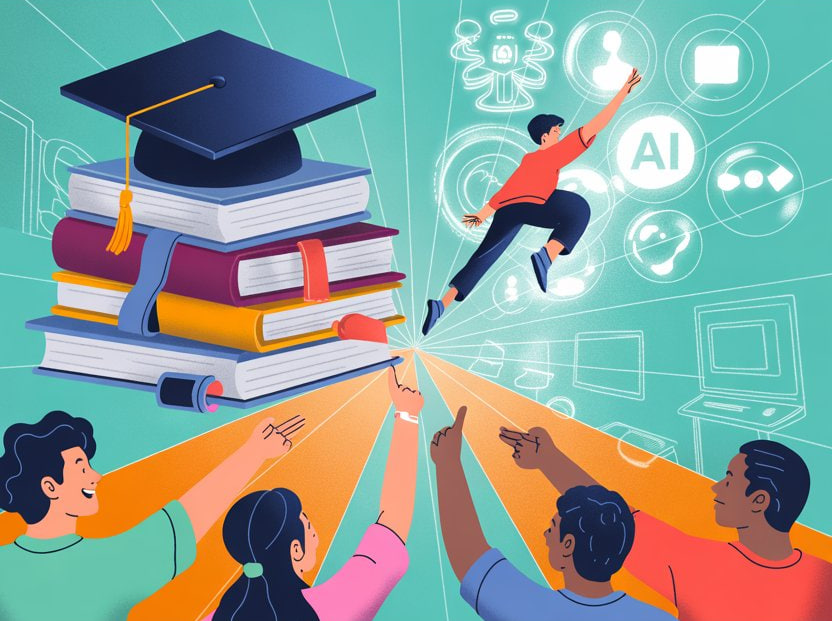
For decades, academic degrees have been seen as the golden ticket to success. But in today’s fast-changing world of work, a degree alone is no longer enough. Employers are increasingly looking for skills, not just certificates. That’s why students must focus on building practical, industry-relevant skills alongside their formal education.
Degrees Alone Don’t Guarantee Jobs
In India, the employability crisis is hard to ignore:
- Only 46.8% of graduates are considered employable.
- 83% of engineering graduates lack industry-relevant skills.
- Just 5% of the workforce has received formal training.
This shows a clear gap between what students learn in classrooms and what the job market actually demands.
Why Skill Development Matters
1. Bridges the Education-Industry Gap
Skills like coding, digital marketing, problem-solving, and AI literacy prepare students for real-world challenges that theory alone cannot cover.
2.Boosts Employability
Employers value candidates who can do the job from day one. Practical skills make you stand out in interviews and reduce training time for companies.
3.Future-Proofs Careers
With automation and AI reshaping industries, skills such as adaptability, critical thinking, and creativity are becoming as important as technical knowledge.
4.Encourages Entrepreneurship
Skill-focused students are better equipped to start businesses, freelance, or join the gig economy with confidence.
Skills That Students Should Focus On
- Technical Skills: Coding, data analysis, AI literacy, digital design.
- Soft Skills: Communication, teamwork, adaptability, creativity.
- Career Skills: Problem-solving, leadership, project management, critical thinking.
Together, these create a well-rounded, future-ready graduate.
Balancing Degrees with Skills
Here’s how students can integrate skill-building into their education:
- Take online certification courses in emerging areas.
- Join internships, workshops, and hackathons for hands-on experience.
- Participate in extracurricular projects that encourage teamwork and innovation.
- Stay updated with industry trends through blogs, podcasts, and professional networks.
Final Thought
A degree opens the door — but skills decide how far you go. By combining academic knowledge with practical skills, students can unlock greater employability, confidence, and long-term career growth.
The future doesn’t belong to those with degrees alone — it belongs to those who can apply knowledge, solve problems, and innovate fearlessly.