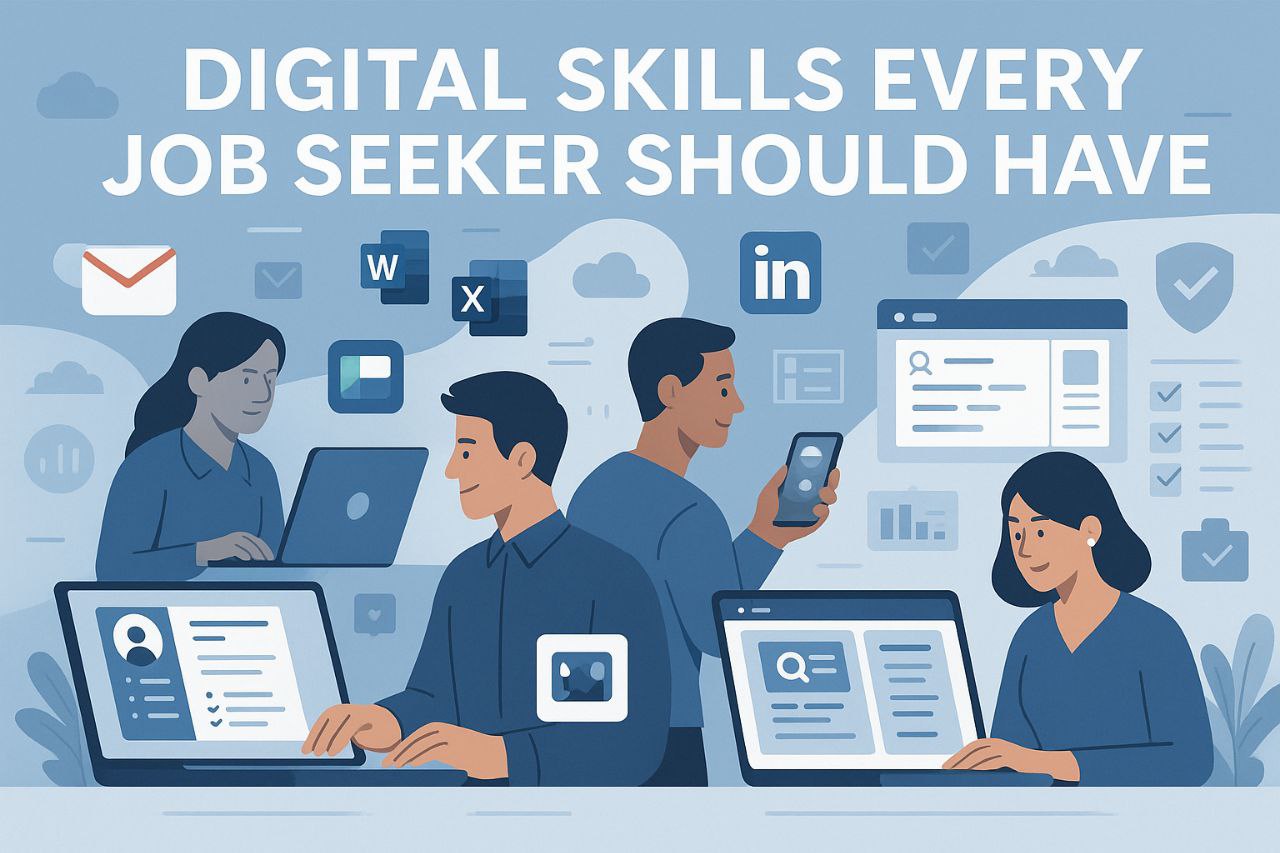
In today's rapidly evolving job market, possessing a strong set of digital skills is no longer a luxury—it's a necessity. Regardless of the industry you're targeting, employers are increasingly seeking candidates who can confidently navigate the digital landscape. From communicating effectively online to leveraging data for informed decisions, these skills are the bedrock of modern professional success.
So, what exactly are these essential digital skills, and how can you ensure you're equipped to meet the demands of the contemporary workforce? Let's dive in.
Digital Communication and Collaboration
Gone are the days when all work happened face-to-face. Email, instant messaging, video conferencing, and collaborative platforms (like Google Workspace, Microsoft 365, or Slack) are now standard tools for everyday operations. Job seekers need to be proficient in:
- Professional Email Etiquette: Crafting clear, concise, and professional emails.
- Video Conferencing Tools: Comfortably using platforms like Zoom, Google Meet, or Microsoft Teams for interviews and virtual meetings.
- Collaborative Software: Working effectively on shared documents, presentations, and spreadsheets. Understanding version control and real-time editing is crucial.
Data Literacy and Analytics
The ability to understand, interpret, and even manipulate data is becoming indispensable. While you might not need to be a data scientist, a basic grasp of data literacy will set you apart. This includes:
- Understanding Basic Data Concepts: What are metrics, trends, and key performance indicators (KPIs)?
- Spreadsheet Proficiency: Beyond basic data entry, knowing how to use functions, create charts, and organize data in tools like Microsoft Excel or Google Sheets. This is often a foundational skill that opens doors to more advanced data analysis.
- Interpreting Data Visualizations: Being able to read and understand graphs, charts, and dashboards to extract meaningful insights.
Cybersecurity Awareness
With the increasing threat of cyberattacks, employers are keen on hiring individuals who understand the importance of digital security. Basic cybersecurity awareness includes:
- Strong Password Practices: Creating unique and complex passwords, and using multi-factor authentication.
- Identifying Phishing Scams: Recognizing suspicious emails and links to protect company data.
- Understanding Data Privacy: Being aware of how personal and professional data should be handled and protected.
Digital Content Creation and Curation (Basic Level)
Even if your role isn't explicitly "marketing" or "design," a foundational understanding of digital content can be incredibly beneficial. This might involve:
- Basic Image Editing: Cropping, resizing, and simple enhancements for presentations or internal communications.
- Understanding SEO Fundamentals: Knowing how search engines work and how content is optimized for visibility.
- Social Media Savvy (Professional Use): Understanding how to use platforms like LinkedIn for professional networking and brand building, rather than just personal updates.
Problem-Solving with Digital Tools
Ultimately, digital skills are about leveraging technology to solve problems efficiently. This encompasses:
- Resourcefulness: Knowing how to find information online, whether it's troubleshooting a software issue or researching a new market trend.
- Adaptability: Being open to learning new software and technologies as they emerge. The digital landscape is constantly shifting, and continuous learning is key.
How to Acquire and Enhance These Skills
This might seem like a daunting list, but the good news is that many of these skills can be acquired and honed through practical, hands-on training. Vocational training programs are particularly adept at providing the applied knowledge and practical experience that employers value. For instance, institutions that specialize in vocational training often offer specialized courses that align perfectly with these in-demand digital competencies, ensuring you're not just learning theory, but gaining usable skills. Whether it's mastering advanced spreadsheet functions or understanding the nuances of digital marketing, a focused vocational approach can bridge the gap between academic knowledge and workplace readiness.
Meritude, for example, understands the critical need for industry-aligned digital proficiency. Their vocational training programs are meticulously designed to equip individuals with the practical, hands-on skills employers are actively seeking. From foundational IT courses to specialized modules in data handling and digital communication, Meritude focuses on real-world application, ensuring their graduates are not just conceptually aware but truly job-ready. They emphasize skill development that directly translates to workplace efficiency and innovation, making their trainees highly desirable candidates in today's competitive job market.
By investing in your digital skill set, you're not just preparing for your next job; you're future-proofing your career. Start today!